

The transitional government expanded its control over most parts of the country, including areas in northeast Syria where, following a military operation in January 2026, it took control of large swathes of territory previously held by the Syrian Democratic Forces (SDF).22 As of early May 202623, the government controlled the majority of the country, with the exception of large parts of Sweida governorate24 and areas of Hasaka governorate around Hasaka and Qamishli cities, as well as Kobane/Ayn al-Arab in Aleppo governorate.25 The transitional government has also deployed security contingents in the cities of Hasaka, Qamishli and Kobane.26
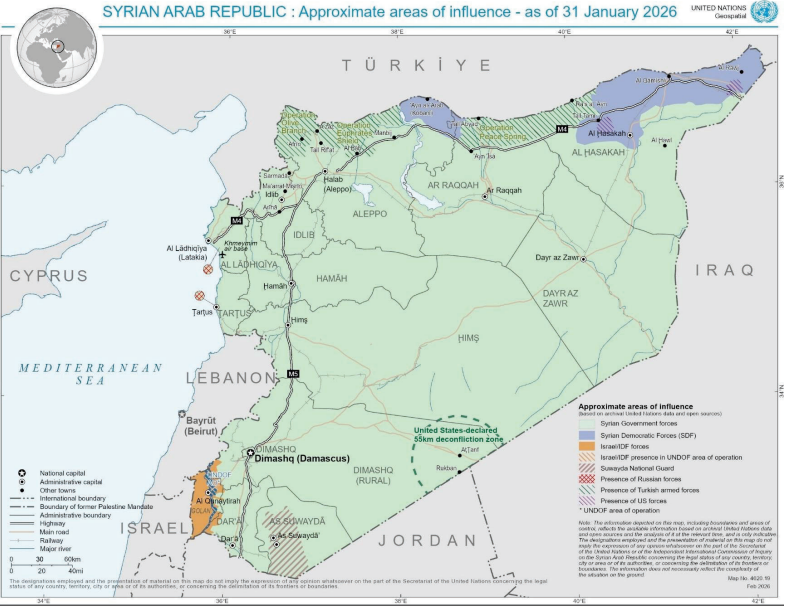
Map 2. © United Nations, Syrian Arab Republic: Approximate areas of influence – as of 31 January 202627
- 22
UN Human Rights Council, Report of the Independent International Commission of Inquiry on the Syrian Arab Republic (A/HRC/61-62), 12 March 2026, url, para 7
- 23
Liveuamap, Syria, 6 May 2026, url
- 24
UN Human Rights Council, Report of the Independent International Commission of Inquiry on the Syrian Arab Republic (A/HRC/61-62), 12 March 2026, url, para 23
- 25
UN Human Rights Council, Report of the Independent International Commission of Inquiry on the Syrian Arab Republic (A/HRC/61-62), 12 March 2026, url, para 23; see map in Etana Syria, Brief: Recent developments in north-east Syria, 12 May 2026, url
- 26
AFP, Syria Govt Forces Enter Qamishli Under Agreement with Kurds, 3 February 2026, url; Reuters, Syrian state forces deploy in Kurdish-run city under ceasefire deal, 2 February 2026, url; National (The), Syrian forces begin deployment to Hasakah, Kobani and Qamishli cities under deal to integrate SDF-held areas, 2 February 2026, url
- 27
UN Human Rights Council, Report of the Independent International Commission of Inquiry on the Syrian Arab Republic (A/HRC/61-62), 12 March 2026, url, Annex III, p. 45