

3.3. Border procedures

Many EU+ countries, especially those that do not have a border procedure, focused their efforts on introducing the necessary legislative and practical amendments to prepare for the implementation of the provisions of the Pact (see Figure 1). In Finland, for example, an amendment to the Aliens Act entered into force in September 2024 which introduced the border procedure.112 The border authorities could refer an application to the border procedure only if the grounds presented in the application suggest that the Finnish Immigration Service would consider the application inadmissible or use an accelerated procedure to process the application.
Figure 1. Countries with a border procedure in their national legislation at the end of 2024
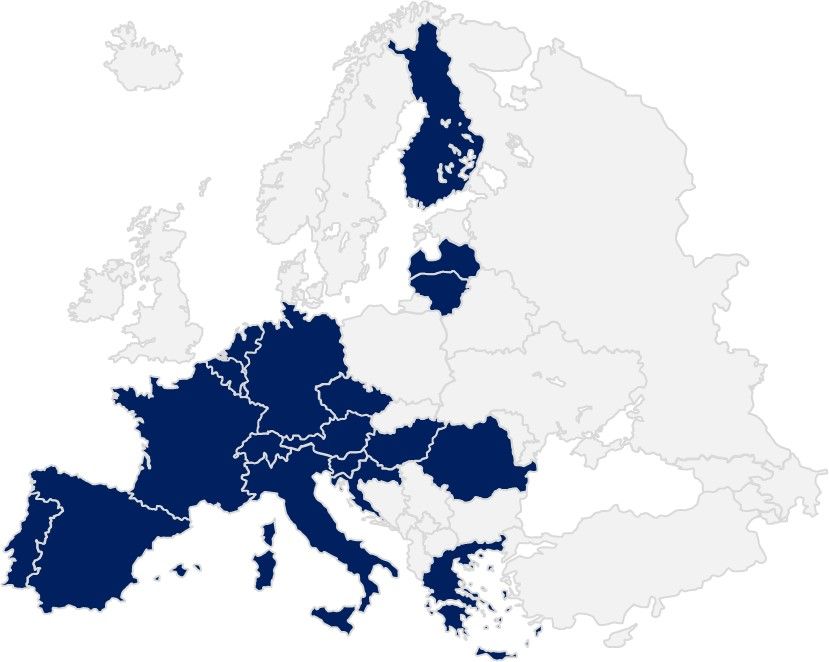
Finland introduced a border procedure in 2024.
Among the provisions on the management of migration flows which was approved by the Italian government in October 2024 (converted into law in December 2024), one sets out that the accelerated border procedure is extended to applicants who entered or stayed irregularly in Italy and applied for international protection, without justified reasons, beyond 90 days after having entered Italian territory. A new provision was added, according to which a migrant who has already materially entered the territory of the state may be the recipient of a deferred refusal to entry orders. The new provision is applicable to those who are taken to areas designated for carrying out the border procedure, after being traced during surveillance activities at the external borders of the EU, including as a result of search or rescue operations at sea. In addition, Decree Law No 145/2024 reduced the time limit from 14 to 7 days to appeal against a negative asylum decision for a first-time application which was channelled into the accelerated border procedure.113
In 2024, significant delays were reported in Spain in accessing the procedure, including at the Madrid Barajas airport.114 To ameliorate the situation, Spanish authorities deployed additional staff to the airport to process requests. The national authority noted that the measures prevented similar collapses from recuring, and work continues in an effort to improve the joint management of the reception rooms at the airport.115
As EU+ countries proceed with preparing for the new procedures in the Pact, a possible challenge in this area relates to the tight time limits foreseen, which will require the allocation of significant resources to ensure compliance.
- 112
Finnish Immigration Service | Maahanmuuttovirasto. (2024, September 2). New border procedure introduced on 1 September 2024.
- 113
- 114
United Nations High Commissioner for Refugees. (2024, January 26). UNHCR recalls the urgency to solve the situation of asylum seekers at the Madrid-Barajas airport. Spanish Ombudsperson | Defensor Del Pueblo. (2024, January 30). El Defensor del Pueblo se dirige a Migraciones, Interior y a AENA y les reclama medidas para que se respeten los derechos fundamentales de las personas que se encuentran en las salas de asilo de Barajas [The Ombudsperson addresses Migration, the Interior and AENA and demands measures from them to respect the fundamental rights of the people who are in the asylum rooms of Barajas]. Spanish Commission for Refugee Aid | Comisión Española de Ayuda al Refugiado. (2024, February 5). Los visados de tránsito elevan los riesgos en las rutas migratorias [Transit visas increase risks on migration routes].
- 115
Spanish Commission for Refugee Aid | Comisión Española de Ayuda al Refugiado. (2024). Input to the Asylum Report 2025.