

The ELN is the last remaining insurgent group in Colombia and a dominant armed actor along the Colombia–Venezuela border.462 It is estimated to have between 6 000 and 8 000 combatants.463 On the Venezuelan side of the border, however, the ELN is widely viewed as a paramilitary organisation operating with state tolerance and, in some cases, in support of state interests.464 The group’s strongholds in Venezuela are located in Zulia, Táchira, Apure, and Amazonas states, where it engages in extortion, drug trafficking, and illegal mining.465
The Colombia–Venezuela border has long served as the ELN’s most important strategic corridor, essential to its financing, its political‑military project, and its overall survival.466 In 2025, the ELN, acting in collaboration with Venezuelan state security forces, reportedly weakened the presence of FARC dissidents and the FBL along the border, taking control of extortion schemes467 and drug‑trafficking routes.468 Most ELN commanders and fighters are believed to be sheltering in Venezuelan territory.469
Insight Crime provides a map of ELN presence in the Colombia-Venezuela border published in December 2025:
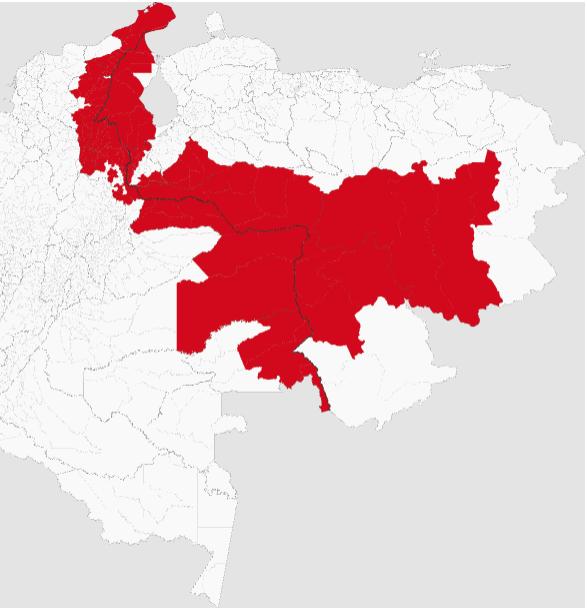
Map 3: Presence of the ELN in the Colombia-Venezuela border, 2025.470
Sources reported that most extortion cases in the border region between Venezuela and Colombia are attributed to the ELN, with victims primarily including business owners, farm operators,471 cattle ranchers,472 and transportation workers.473 A report by the Institute for War and Peace Reporting (IWPR), based on interviews with local actors such as ranchers and farm owners, indicated that, according to the last available extortion statistics from 2021, approximately 75 % of the 8 600 cattle ranchers in Apure were being extorted by the ELN, with monthly payments ranging from 200 to 400 USD.474
A 2024 field investigation by Transparencia Venezuela in Táchira state found that ELN operatives reportedly position themselves openly at informal checkpoints, often alongside state security forces.475 Extortion payments are made in cash, sex, food,476 cattle, or 'logistical support'.477 According to Transparencia Venezuela, extortion cases involving the ELN are rarely investigated or sanctioned by authorities.478 These payments are commonly referred to as the 'war tax' (impuesto de guerra), matraca, or 'collaborations' (colaboraciones).479
The ELN has imposed extreme punishments in several Indigenous communities, including carrying out summary executions for violent offences such as sexual assault.480 In the Yapacana mining area of Amazonas state, individuals who violate the group’s rules face coercive ultimatums; some young people have reportedly been told they must either join the guerrilla forces or be killed.481 Child recruitment by guerrilla groups, including of Indigenous children, is described as 'rampant'.482 Children are recruited with gifts, small payments, and promises of affection, and are then sent to work in mines, collect extortion fees, enforce violent punishments, and transport drugs across borders.483 In one reported case, a guerrilla group demanded a 4 000 USD payment to allow a recruited youth to return home.484 Briceño-León added that recruitment is facilitated due to high levels of poverty that force some to join criminal groups. Once inside, however, it is very difficult to leave the group and those who try, flee to Colombia or other countries. There have been cases of deserters who have been killed by armed groups in Venezuela and their bodies later appear on the Colombian side of the border.485
The ELN uses Venezuelan territory both to evade targeted operations in Colombia and to capture local state infrastructure, enabling it to establish parallel authorities and control illicit economies.486 ABC reported that the group reportedly has around 2 500 combatants in the Venezuela,487 whereas InSight Crime indicated that 20 % of the 6 300 total number of combatants are stationed in Venezuela.488 Transparencia Venezuela indicated that the ELN and FARC dissident groups control local schools in Zulia state to ensure the education of members’ children who attend classes in Venezuela.489
After the US captured Maduro, the ELN publicly vowed to 'resist'.490 However, members of the group reportedly adopted a lower profile and retreated toward the border region as a precautionary response to the new political and security environment.491
- 462
InSight Crime, ELN in Venezuela, 13 January 2026, url; CBC, U.S. attack in Venezuela creates risk, opportunity for guerrilla groups, 10 January 2026, url
- 463
CBC, U.S. attack in Venezuela creates risk, opportunity for guerrilla groups, 10 January 2026, url
- 464
InSight Crime, ELN in Venezuela, 13 January 2026, url
- 465
InSight Crime, ELN in Venezuela, 13 January 2026, url
- 466
InSight Crime, Will Colombian Guerrillas Lose Their Safe Haven in Post‑Maduro Venezuela?, 22 January 2026, url
- 467
IWPR, Apure-Arauca Sociedad Anónima, 2023, url; InSight Crime, ELN in Venezuela, 13 January 2026, url
- 468
InSight Crime, ELN in Venezuela, 13 January 2026, url
- 469
InSight Crime, ELN in Venezuela, 13 January 2026, url
- 470
InSight Crime, The Future of the ELN, 8 December 2025, url
- 471
Transparencia Venezuela, The faces of extortion in Venezuela 2024, 2025, url, p. 37; IWPR, Apure-Arauca Sociedad Anónima, 2023, url
- 472
IWPR, Apure-Arauca Sociedad Anónima, 2023, url
- 473
Transparencia Venezuela, The faces of extortion in Venezuela 2024, 2025, url, p. 37; IWPR, Apure-Arauca Sociedad Anónima, 2023, url
- 474
IWPR, Apure-Arauca Sociedad Anónima, 2023, url
- 475
Transparencia Venezuela, The faces of extortion in Venezuela 2024, 2025, url, p. 37
- 476
Transparencia Venezuela, The faces of extortion in Venezuela 2024, 2025, url, p. 37
- 477
IWPR, Apure-Arauca Sociedad Anónima, 2023, url
- 478
Transparencia Venezuela, The faces of extortion in Venezuela 2024, 2025, url, p. 35
- 479
IWPR, Apure-Arauca Sociedad Anónima, 2023, url
- 480
International Crisis Group, A Curse of Gold: Mining and Violence in Venezuela’s South, 29 July 2025, url, p. 4
- 481
International Crisis Group, A Curse of Gold: Mining and Violence in Venezuela’s South, 29 July 2025, url, p. 4
- 482
International Crisis Group, A Curse of Gold: Mining and Violence in Venezuela’s South, 29 July 2025, url, p. 18
- 483
International Crisis Group, A Curse of Gold: Mining and Violence in Venezuela’s South, 29 July 2025, url, p. 18; Briceño-León, telephone interview, 28 May 2026
- 484
International Crisis Group, A Curse of Gold: Mining and Violence in Venezuela’s South, 29 July 2025, url, p. 18
- 485
Briceño-León, telephone interview, 28 May 2026. See also: Vorágine, De ambos lados, la frontera binacional se abre a las desapariciones, 29 June 2025, url
- 486
ABC, The US wants to control Venezuela's finances. These armed groups could make it difficult, 29 January 2026, url
- 487
ABC, The US wants to control Venezuela's finances. These armed groups could make it difficult, 29 January 2026, url
- 488
InSight Crime, National Liberation Army (ELN), 27 February 2026, url
- 489
Transparencia Venezuela, The faces of extortion in Venezuela 2024, 2025, url, p. 39
- 490
InSight Crime, Will Colombian Guerrillas Lose Their Safe Haven in Post‑Maduro Venezuela?, 22 January 2026, url
- 491
InSight Crime, Will Colombian Guerrillas Lose Their Safe Haven in Post‑Maduro Venezuela?, 22 January 2026, url