

Interview with Alžbeta Kvasničková from Slovakia, former EUAA expert deployed in Cyprus
Can you introduce yourself, and tell us what was your role at the Kofinou centre?
I have been working as a Senior State Advisor at the Migration Office of the Ministry of Interior of the Slovak Republic for 5 years. In Slovakia, the main topics I focus on are the integration of beneficiaries of international protection, migration policy of the Slovak republic, protection of migrant women and children, and the national programme AMIF in the field of the asylum.
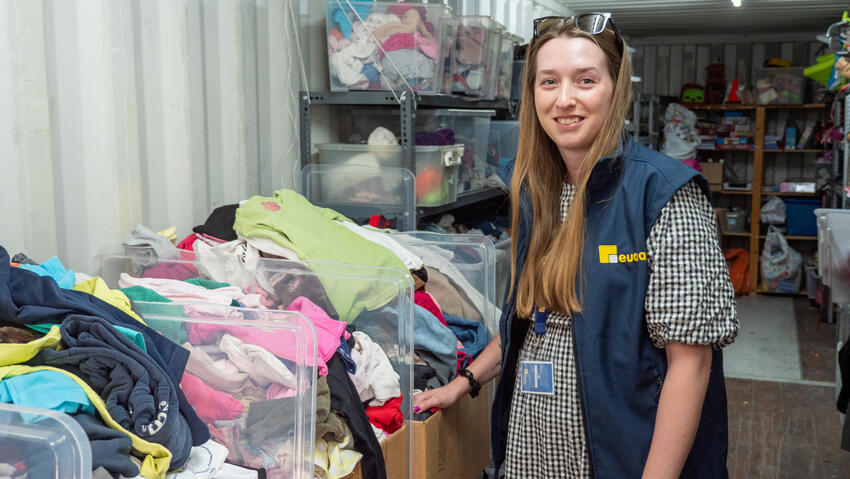
During my deployment as a member state expert, I was responsible for the information provision to the newcomers, the distribution of the donations and coordination of the clothes collection and distribution, accompanying the residents to the hospital, statistics, medical cards, and medical prescriptions.
Tell us about the clothes collection project. What is it about and who are the beneficiaries?
The project started this year when we received a new container for donations. Of course, donations were distributed in Kofinou before as well, but this time my main task was to collect clothes from other places in the centre, contact NGOs and private donors for donations (mainly the Red Cross) and organize everything.
The organization of the collection is key for proper distribution, because just by having a well-organized collection, we can ensure a proper distribution of items for everyone. The beneficiaries are all residents of the Kofinou Reception Centre in Cyprus.
Walk us through the process, how does it work?
I prepared a timetable of distribution which was translated by interpreters to other languages so that distribution was easier for beneficiaries. The reason behind the timetable was to organise the distribution and to teach residents that if they need something, they should come on time, like is required in other offices. When the residents came for some clothes, they had to provide their food card (the register card in the Kofinou Reception Centre), so I could write their number and check what was distributed to whom and so we could have proper statistics.
Where do donations come from? Do they match the needs of the centre residents?
We already had in the centre many items, it just needed to be organized properly. After organizing the donations, it was clear to us what we had and what was still needed. For example, we had a lot of clothes for new-borns, but since the numbers of new-borns were not high in Kofinou, we distributed some clothes to Pournara. On the other hand, blankets were very much needed, since it was February, and the weather was cold. Many residents requested a lot of different items, so I prepared a list of requested items, and contacted the Red Cross and NGOs for donations.
What can you tell us about your personal experience there?
It was a very nice experience to help residents with their material needs, but sometimes it was difficult to explain that they can choose only one pair of shoes or a jacket, because I needed to keep some pieces for the other residents and make sure that everyone could receive something.
Anything else you would like to add? Any positive stories?
For me, the funniest and nicest times were when all the mothers with children from the centre came and left the kids in the pushchairs at the front with me while they were checking the storage. I had a small kindergarten there and could play with them.