

Misconceptions about asylum are widespread and often influence public debates. This brief note aims to dispel several common myths by drawing on EUAA data, Eurostat and other statistics and analyses from the Situational Awareness Unit (SAU). It aims to support a more accurate understanding of how the EU+ asylum system functions in practice.
Reality: Asylum is linked to both irregular and regular migration channels.
Only a share of applicants enter the EU+ through irregular border crossings. In fact, many applications are lodged after regular entry, including persons who may have overstayed their period of regular stay. These include:
-
Nationals of visa-free countries, who may arrive lawfully for tourism or family visits and subsequently apply for asylum.
-
Visa holders, who arrive by air with a valid short- or long-stay visa and then apply for asylum.
-
Legally resident persons, whose residence permit has expired also sometimes apply for asylum for example because the situation in their home country deteriorated.
As a result, asylum applications should not be interpreted as an indicator of irregular arrivals by boat.
Reality: Asylum data reflect applications lodged, not new arrivals.
A significant share of applications is lodged by people who were already present in the EU+, including:
-
Repeated applications (applying again after a final decision), sometimes triggered by legitimate deterioration in the country of origin, by changes in asylum policies or procedures, or by even when the applicant continues to have no reasonable grounds for asylum.
-
Secondary movements, where individuals repeatedly apply for asylum in different EU+ countries. Remarkably this even includes persons who have already been granted protection in one or another country.
-
Children born in the EU+ to asylum-seeking parents, who are included in monthly figures in some countries.
Therefore, asylum trends also reflect changes occurring within the EU+ on top of new inflows.
Reality: International protection covers a wider set of risks. People may qualify for refugee status or subsidiary protection based on persecution, serious harm, or a well-founded fear arising from their:
-
Race,
-
Membership of a particular social group, such as LGBTIQ persecution, or gender-based persecution (e.g. recent recognition for Afghan women),
-
Religion,
-
Nationality, or
-
Political opinion.
War is certainly a common driver, but not the only one recognised under EU and international law.
Reality: Trends in applications tend to be influenced by various developments within and beyond the EU, rather than just border management. Applications may fluctuate in response to:
-
War eruptions or escalation of conflicts (e.g. the Russian invasion in Ukraine in 2022) dependent on availability of routes/means of arrival;
-
Political transitions in countries of origin (e.g. Syria post-December 2024);
-
Major court rulings (e.g. CJEU ruling on Afghan women);
-
Visa policies inside and outside the EU+ (e.g. alignment of visa policies in Western Balkan countries with the EU in 2022–2023);
-
Changes in onward routes, regional instability or restrictive policies in neighbouring regions (e.g. U.S. policy shifts affecting Venezuelans).
Border controls are one element within a much wider migration ecosystem.
Reality: Destination choices are shaped more by practical and social factors than recognition rates. Asylum seekers do not have full visibility of recognition rates across EU+ countries, and even if they did, these rates vary over time and depend on the merits of individual applications.
In practice, destination choices are often influenced by a variety of factors, including:
-
Existing diaspora communities, including family, linguistic or cultural ties.
-
Migration cultures, including access to information and physical travel infrastructure.
-
Perceived economic opportunities and labour market conditions.
As a result, countries which happen to have the highest recognition rates do not receive the most applications, and countries with similar recognition rates very often receive very different numbers of applications. See monthly analysis of recognition rates across the EU+.
Reality: Migration to Europe is dominated by regular pathways, including for short-term or longer stay (Figure 1).
-
For example, in 2024, the EU approved nearly 10 million short stay Schengen visa applications (European Commission).
-
In 2024, the EU issued 3.5 million first residence permits to non-EU citizens (Eurostat), mostly for employment, or family reunification (European Migration Network).
-
In comparison, there were about 1 million applications for asylum, nearly 10% of which were repeated applications (EUAA).
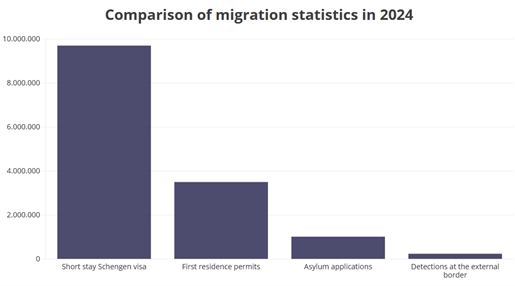
Figure 1. Comparison of migration statistics 2024.
Sources: Schengen visa, First residence permits, Applications for asylum, Detections at the border
Reality: Asylum seekers and refugees are concentrated in their neighbouring countries.
-
In 2024, two thirds of refugees and other people in need of international protection lived in countries neighbouring their countries of origin.
-
For example, Lebanon hosted the largest number of refugees and other people in need of international protection relative to its population size, while Iran and Türkiye hosted the most in absolute terms (UNHCR).
In short
Asylum statistics are an essential indicator for EU+ situational awareness and the functioning of the Common European Asylum System (CEAS), but they require careful interpretation. Applications reflect a mix of regular and irregular entries, newly arrived and long-present individuals, and procedural as well as protection-related dynamics. Understanding these nuances helps ensure that public debate, policy discussions and operational preparedness are grounded in evidence rather than misconceptions.