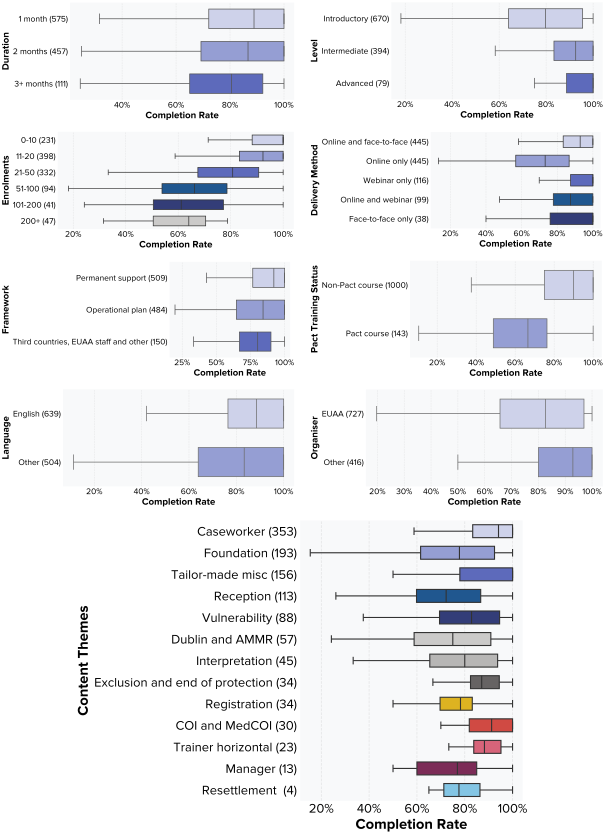
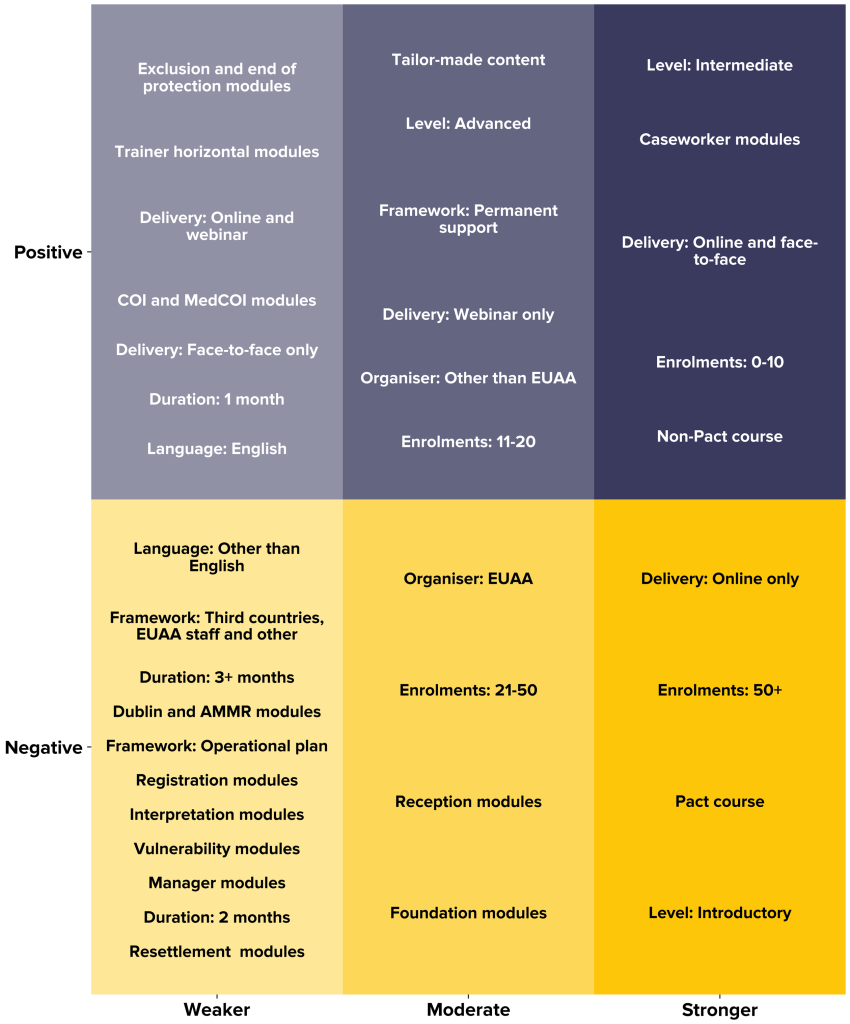
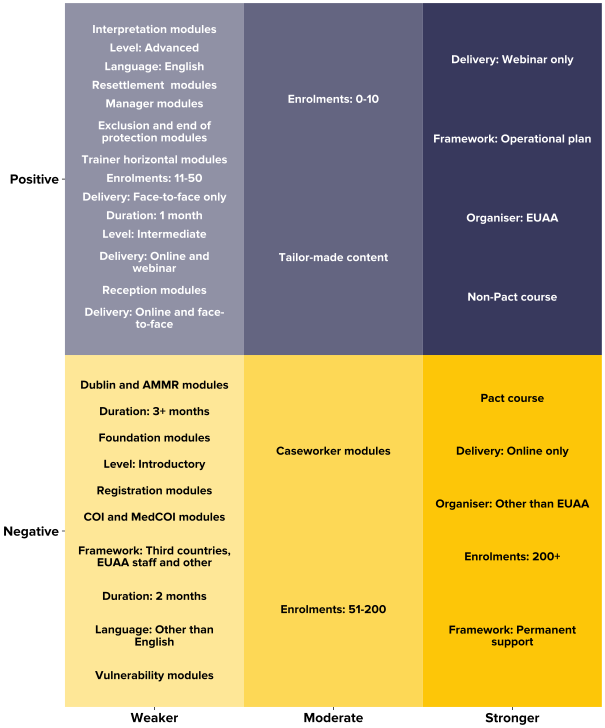
Summary of the factors’ relationships with the completion rate
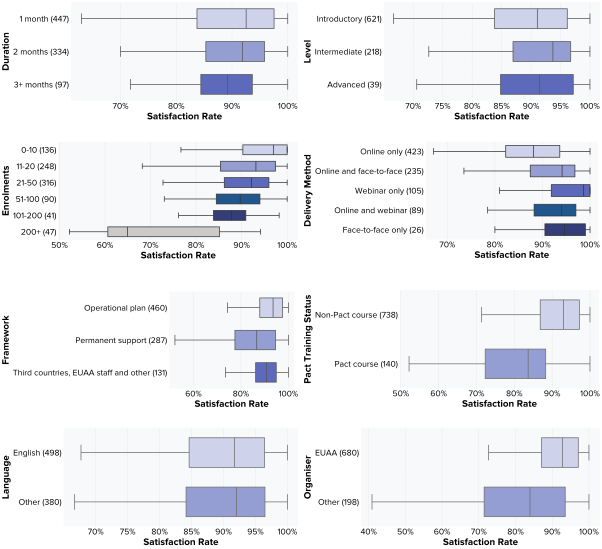
Summary of the factors’ relationships with the satisfaction rate
Source: European Union Agency for Asylum (EUAA)
The EUAA has been delivering training since 2012, offering a comprehensive EUAA training catalogue of 82 modules and tailor-made courses. In 2025, a total of 68 training contents were delivered, of which 54 were EUAA modules and 15 were tailor-made courses.
This chapter presents data on training participations across 13 thematic areas. The figures and trends reflect all participations across all training sessions and delivery frameworks. The content offered through the EUAA training catalogue are grouped and presented under the following 13 themes.
A detailed list of content by theme is available in the Annex, which also contains a factsheet for each theme, outlining the number of participations per content type.
Themes of content followed in 2025*
In 2025, 9 287 training participations were recorded in content developed for caseworkers, representing the largest share of overall engagement. Foundation content followed closely with 8 012 participations. Together, these two themes accounted for more than half of all participations in 2025.
Reception (3 205), Dublin and AMMR (2 984) and tailor-made miscellaneous training (2 790) also recorded substantial participation.
Additional participations were recorded in vulnerability (2 341), interpretation (800), registration (788), exclusion and end of protection (503) and COI and MedCOI (388). More specialised themes, such as trainer horizontal (320), manager (298) and resettlement (35), demonstrated more targeted participation patterns.
*Includes participations across all training frameworks.
In 2025, training content developed for caseworkers was the most geographically widespread across EU+ countries. Representatives from 28 EU+ countries attended at least one caseworker training content session, and the category also recorded the highest overall participation volume among all content themes (9 287 participations).
Content targeting managers (26 EU+ countries; 298 participations), along with Dublin and AMMR (25 EU+ countries; 2 984 participations) and vulnerability content (25 EU+ countries, 2 341 participations), also demonstrated a strong geographical reach.
Tailor-made miscellaneous content reached 23 EU+ countries and recorded 2 790 participations. Similarly, trainer horizontal content was followed by representatives from 21 EU+ countries (320 participations).
Training content related to COI and MedCOI (388 participations), along with reception and foundation, reached more than 19 EU+ countries. Foundation training content recorded particularly high participations (8 012), while reception-related content accounted for 3 205 participations. Registration-related content (788 participations) was attended by representatives from 15 EU+ countries.
More specialised themes, such as exclusion and end of protection (12 EU+ countries; 503 participations), interpretation (13 EU+ countries; 800 participations) and resettlement (10 EU+ countries; 35 participations), demonstrated more limited geographical reach but more targeted engagement.
Overall, 10 training content themes were attended by representatives from at least 19 EU+ countries, demonstrating the broad geographical reach of EUAA training activities.
Content themes between 2012 and 2025
Between 2012 and 2025, training content developed for caseworkers accounted for the largest cumulative share of participations, totalling 53 586. Foundation content followed with 20 228 participations, ahead of tailor-made content (11 930), reception content (9 538) and content addressing vulnerability (9 158).
Specialised thematic content also recorded substantial engagement. The Dublin and AMMR theme accounted for 6 120 participations, while exclusion and end-of-protection content reached 4 076 participations. Interpretation-related training registered 3 631 participations, and the COI and MedCOI theme registered 3 031.
Trainer horizontal content recorded 2 827 participations, while registration-related content saw 1 903. Over the reporting period, manager-focused content accounted for 1 327 participations and resettlement content recorded 406 participations.
Between 2012 and 2025, caseworker training content accounted for the largest cumulative share of participations, reaching 53 586, and demonstrated the widest geographical coverage, with representatives from 31 EU+ countries.
Foundation content followed with 20 228 participations and coverage across 30 EU+ countries. Tailor-made training content (11 930 participations; 30 EU+ countries) and reception-focused content (9 538 participations; 29 EU+ countries) also demonstrated substantial and geographically diverse engagement. Vulnerability-related content recorded 9 158 participations and reached 31 EU+ countries.
Specialised thematic content likewise recorded significant participation over the reporting period. Content related to Dublin and the AMMR accounted for 6 120 participations and reached 31 EU+ countries. Exclusion and end of protection recorded 4 076 participations (29 EU+ countries), while interpretation content reached 3 631 participations (26 EU+ countries), and COI and MedCOI content saw 3 031 participations (30 EU+ countries).
Trainer horizontal content (2 827 participations; 30 EU+ countries), registration content (1 903 participations; 20 EU+ countries), manager-focused content (1 327 participations; 28 EU+ countries) and resettlement-related content (406 participations; 20 EU+ countries) reflect more targeted yet strategically important areas of engagement within the overall training activities.
Overall, between 2012 and 2025, 11 content themes reached at least 26 EU+ countries.
While foundation training content recorded the highest levels of participation cumulatively between 2012 and 2024, caseworker training content took the lead in 2025, accounting for approximately 30 % of all participations (9 287). Notably, content under the themes of foundation, reception, Dublin and the AMMR, tailor-made training, vulnerability, interpretation and registration each recorded their highest annual participation levels in 2025.
Foundation content followed closely, accounting for 25 % (8 012 participations). Reception-related content represented 10 % of total participations (3 205), while content on Dublin and the AMMR accounted for 9 % (2 984 participations). Tailor-made training content contributed also to almost 9 % (2 790 participations), and vulnerability-related training represented 7 % (2 341 participations).
More specialised themes accounted for smaller but still relevant shares of overall participation. Interpretation-related content represented 3 % (800 participations), registration 2 % (788), exclusion and end of protection almost 2 % (503), COI and MedCOI 1 % (388) and trainer horizontal 1 % (320). Manager-focused content accounted for 0.9 % (298 participations), while resettlement-related content represented 0.1 % (35 participations).
Compared with 2024, 2025 saw particularly strong growth in content related to Dublin and the AMMR, caseworker, reception and registration training. Meanwhile, some themes, such as interpretation, manager-focused and resettlement content, recorded lower participation levels compared with the previous year.
Each content theme is analysed separately in the sections below, providing further insights into trends, geographical coverage and participation patterns.
The previous chapters outlined the results of participant training and the features of modules and sessions, while user feedback will be presented in Chapter 4. The present chapter concentrates on outlining the characteristics of the training modules, uncovering associations between various factors (e.g. training content and participant engagement) and investigating the relationships between these elements. It makes use of exploratory data analysis approaches, whereby meaningful patterns in the data are presented using statistical graphics. In this way, the chapter presents useful data visualisations that shed light on potential factors influencing training outcomes, thereby informing future work that could utilise more research-oriented methods.
Two response variables (i.e. outcome measures) – completion rate and satisfaction rate – are considered in detail. Each outcome is examined in relation to one or more explanatory variables, including session size (number of enrolments), delivery method, duration (7), language (English versus other), organiser (EUAA versus other), level (introductory, intermediate or advanced), framework (permanent, operational or third country), content category (13 themes) and pact training status (whether the session is related to the Pact on Migration and Asylum).
Each section presents a series of visual summaries using box-and-whisker plots (also known as box plots) to illustrate the relationship between the response variables and each explanatory variable. These plots offer a clear overview of typical values (the median, shown by a central line) and the distribution of the data. The box represents the middle spread, where half of the values fall (the interquartile range), while the whiskers extend to show the highest and lowest values that fall within 1.5 times the interquartile range from the edge of each box (8). The relationships between these elements also show any skew in the data – for example, a long tail on one side suggests that values are more spread out in that direction.
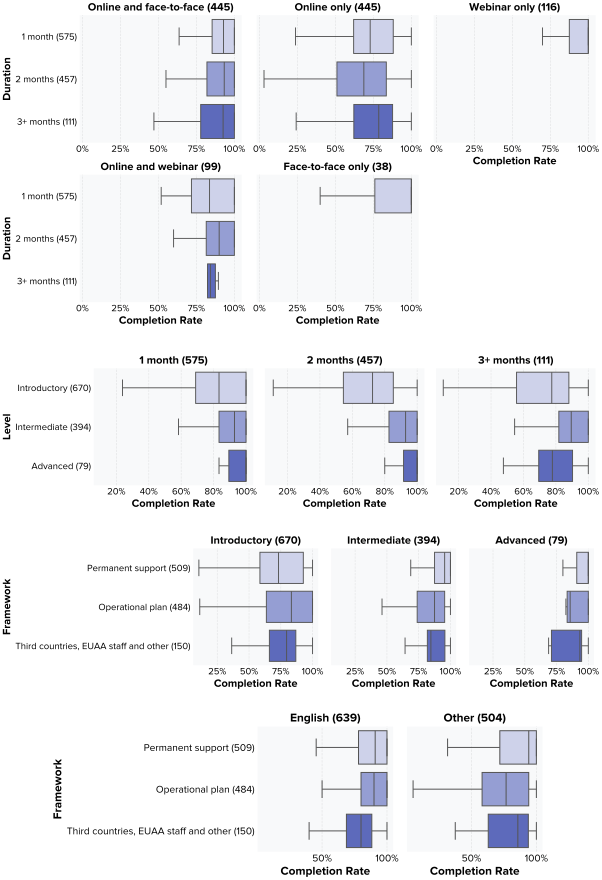
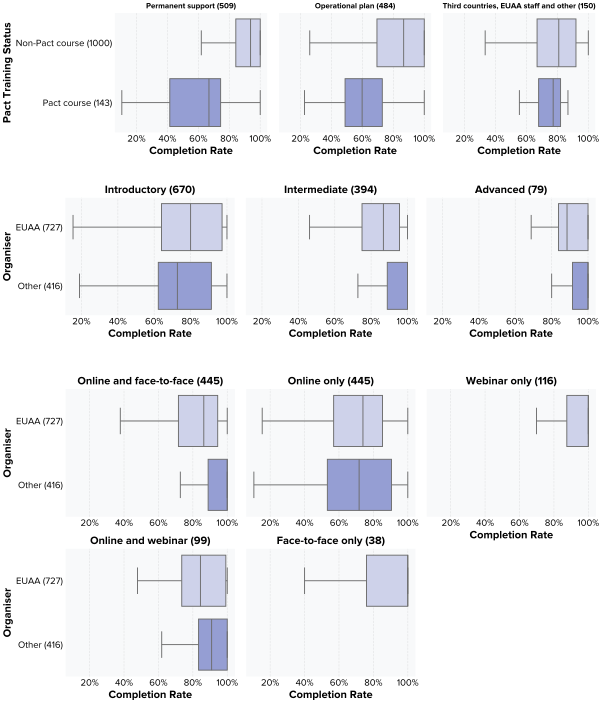
To further explore interactions between the variables, selected examples of three-way plots are also included. These extend the two-way visualisation by showing how the relationships between variables change depending on a third variable. The number of sessions contributing to each category is shown in brackets alongside the axis labels, providing context for interpreting the distribution and differences in variability across groups. Counts shown in the satisfaction rate plots may be lower because some sessions did not receive any feedback and therefore have no calculated satisfaction rate. Therefore, such sessions are not part of the distribution displayed in the box plots.
Column and stacked column charts are presented to illustrate relationships between the explanatory variables. Examples include median session duration by delivery method, and the distribution of session counts across content categories by framework. These charts provide context for interpreting the results by highlighting systematic associations between explanatory variables that may help explain patterns observed in completion and satisfaction.
The chapter concludes with separate association tables for completion and satisfaction. These summarise the direction and strength of associations between explanatory subcategories and each outcome. Together, the visual and tabular summaries provide an overview of both outcome relationships and the underlying structure of the training data.
*Indicates the percentage of learners who successfully completed a training activity. Ratio of completed participations to the number of enrolments.
Two-way relationships
The following insights summarise the two-way associations between the completion rate and various explanatory variables.
Three-way relationships
Below is a summary of the three-way (lattice) analyses, where each factor is examined in relation to the completion rate and in combination with a third variable to determine whether the original two-way relationships (outlined previously) remain consistent or show exceptions. For reasons of conciseness, only a selection of the most informative three-way lattice plots is provided. Overall, many of the two-way patterns persist, though some differences emerge when additional variables are introduced.
*Indicates overall learner satisfaction based on feedback calculated from closed questions regarding training content, teaching methods and overall experience.
Two-way relationships
The following insights summarise the two-way associations between the satisfaction rate and various explanatory variables.
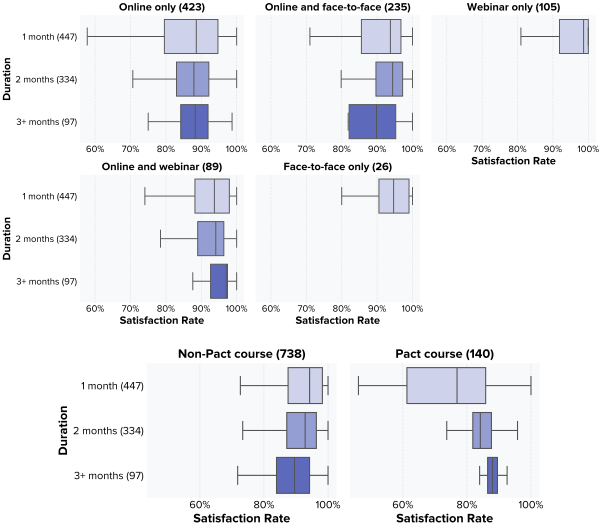
Duration. Modules with a longer duration tend to have a slightly lower satisfaction rate, indicating potential fatigue or unmet expectations in longer training sessions.
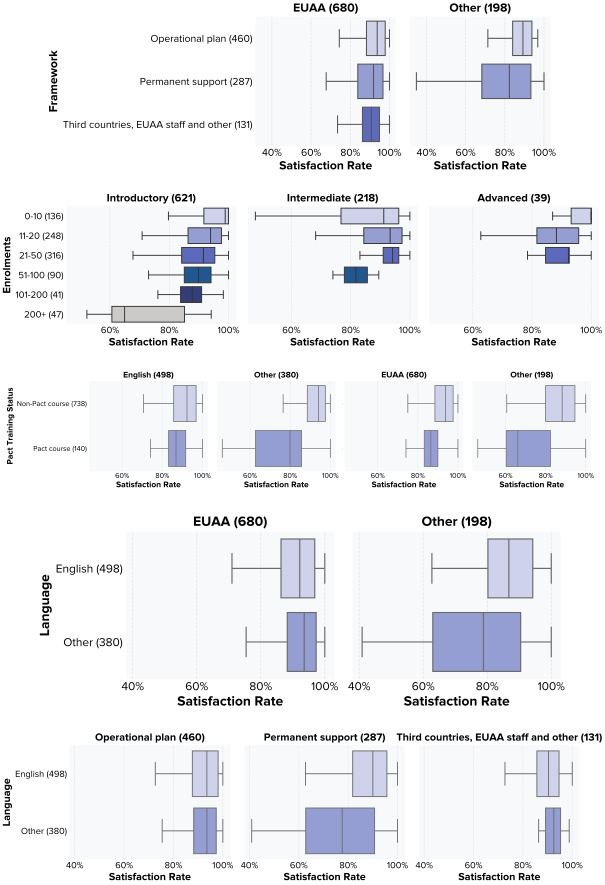
Level. Both introductory- and advanced-level content exhibit lower satisfaction rates compared with intermediate-level content, suggesting that learners tend to favour material that is balanced in complexity rather than insufficiently challenging or highly demanding.
Enrolment. Larger sessions are associated with lower satisfaction rates, indicating that learner needs may be addressed more effectively in smaller groups. Satisfaction levels below 80 % are observed primarily in very large sessions, typically those exceeding 200 enrolments.
Delivery method. Fully online modules exhibit lower satisfaction rates compared with face-to-face or blended formats. This may reflect reduced interaction, less immediate feedback, technological barriers or challenges in sustaining motivation.
Framework. Sessions in the context of permanent support tend to have lower satisfaction rates compared with those delivered in the context of operational support. This may be because operational support sessions typically respond directly to immediate or urgent training needs, closely aligning with learner expectations and creating a clearer sense of relevance.
Pact training status. Pact-related training sessions show notably lower satisfaction rates, with their median approximately 10 percentage points below that of other sessions. This gap likely reflects the structural features of pact training. These sessions are generally introductory, delivered in a self-paced online format and offered to very large groups, with an average enrolment of around 140 participants. Since introductory-level content, self-paced online-only delivery and larger group sizes are each linked to lower satisfaction, their combined presence in pact training may contribute to the comparatively lower satisfaction levels observed. Although session size does not affect the learner experience in online self-paced formats, content delivered to much larger groups may be less tailored to individual needs, which could in turn reduce training effectiveness.
Language. Differences in satisfaction rates between sessions delivered in English and those delivered in other languages appear to be negligible.
Organiser. Sessions organised by the EUAA have higher satisfaction rates, implying effective management, alignment with learner needs and/or robust course design and delivery.
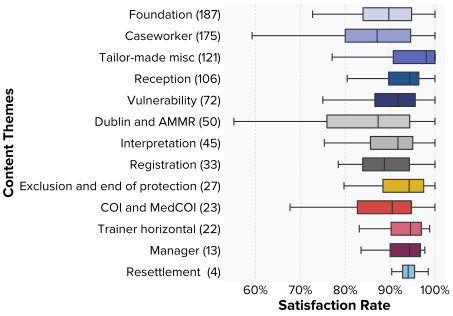
Content theme. Modules within the themes ‘Foundation’, ‘Caseworker’, ‘Dublin and AMMR’, ‘Registration’ and ‘COI and MedCOI’ tend to record lower satisfaction rates. This indicates that these categories may have common features linked to reduced satisfaction, including large session sizes, introductory or advanced content and a stronger reliance on online delivery with limited face-to-face interaction. Together, these features may reduce engagement and perceived relevance, contributing to greater variability in learner experiences and lower overall satisfaction.
Three-way relationships
Below is a summary of the three-way (lattice) analyses, where each factor is examined in relation to the satisfaction rate and in combination with a third variable to determine whether the original two-way relationships (outlined previously) remain consistent or show exceptions. For reasons of conciseness, only a selection of the most informative three-way lattice plots is provided. Overall, many of the two-way patterns persist, though some differences emerge when additional variables are introduced.
This section presents a selected set of visualisations highlighting key structural relationships between training characteristics. For conciseness, only the most informative patterns are included. The figures comprise simple column charts displaying median session duration (in days) or enrolment levels across selected factors, along with stacked column charts showing the distribution of sessions across categories of one factor stratified by another. Together, these visualisations provide contextual insight into how training formats are structured across core characteristics.
(a) Structural patterns in duration and enrolment
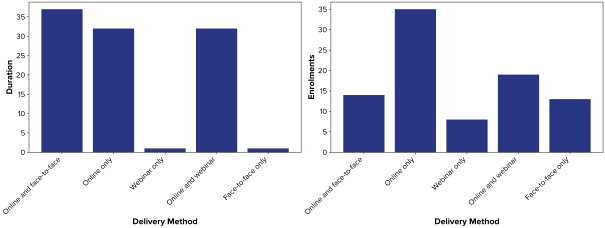
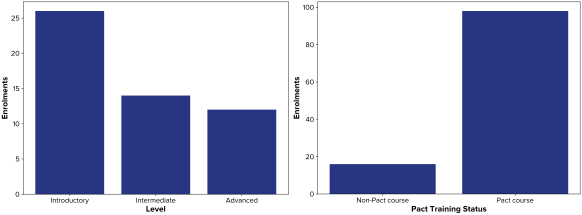
The column charts show clear structural differences across delivery methods, levels and pact status. Sessions that include a self-paced online component tend to have longer durations. This reflects format design: ‘Webinar-only’ and ‘Face-to-face-only’ sessions usually take place within a single day, whereas online components other than a webinar are self-paced and delivered within an extended completion window. ‘Online-only’ delivery also features substantially higher enrolments, with a median of around 35 participants, compared with fewer than 20 for other delivery modalities. As self-paced online-only sessions therefore combine longer durations with larger groups, which are both associated with lower completion and satisfaction, this structure helps explain their comparatively weaker performance.
Introductory-level modules typically enrol almost twice as many participants as intermediate- or advanced-level content, which may partly account for their lower performance metrics. Pact-related sessions stand out even more clearly, with median enrolments close to 100. Although this reflects their predominantly introductory-level content and online format, the scale of participation indicates a distinct structural model that likely contributes to the comparatively lower outcomes observed.
Median duration (in days) and enrolments for selected training characteristics
(b) Structural concentration across selected training characteristics
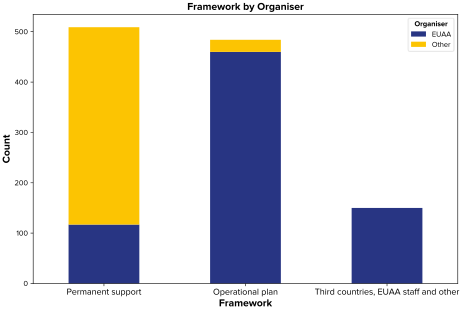
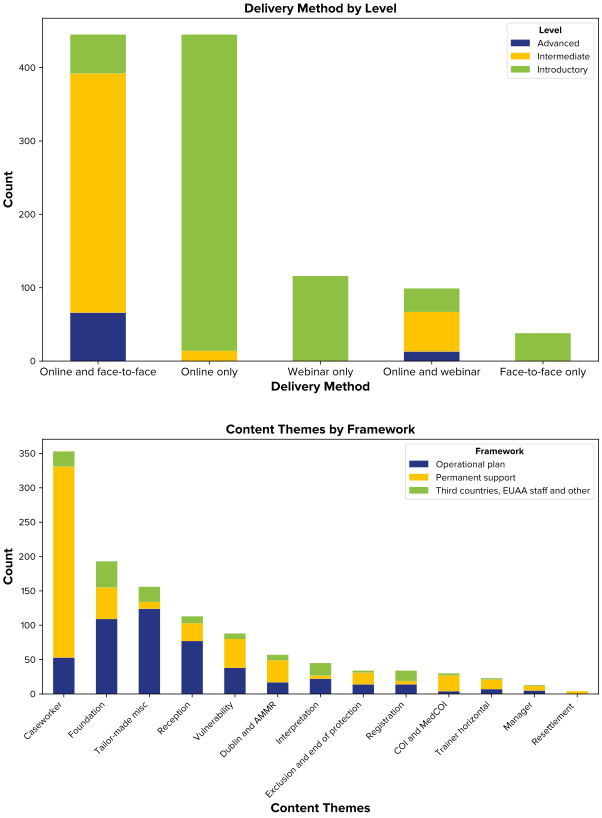
The stacked charts illustrate how training characteristics cluster across frameworks, organisers, delivery methods and themes. Sessions under the permanent support framework are largely organised by non-EUAA institutions, showing similar performance patterns (higher completion but lower satisfaction) and suggesting shared structural features. Delivery also varies by level: introductory-level content is primarily delivered online only, whereas intermediate- and advanced-level modules are more often delivered through hybrid formats. This aligns with earlier findings showing higher completion rates for intermediate- and advanced-level content, and comparatively greater satisfaction for intermediate-level modules.
Most ‘Caseworker’ modules are delivered within the permanent support framework, which may partly account for their observed performance pattern. By contrast, operational plan sessions are distributed across a wider range of themes, with tailor-made content constituting the largest share and exhibiting high completion and satisfaction rates. Although not illustrated in the figures, this strong performance is closely associated with the frequent use of webinar-only delivery within tailor-made sessions.
Distribution of sessions across framework and organiser
Distribution of sessions across delivery methods and content themes
Source: European Union Agency for Asylum (EUAA)
The training monitoring reports provide a quarterly and an annual overview of the performance of EUAA training activities. The aim of this monitoring is twofold: to identify good practices and to detect potential areas requiring attention or improvement. As feedback is anonymised at the session level, this forms the initial unit of analysis, with findings aggregated to allow comparisons across modules, delivery modes and organising countries, for example. This approach supports the continuous improvement of EUAA training activities and helps identify emerging challenges that may require follow-up action.
The analysis applies a ‘low-threshold breach’ methodology, which is used to assess whether selected training session indicators fall below certain predefined performance thresholds. The thresholds are set dynamically for each time period: the low threshold for satisfaction is set to the mean rate minus 3 %, while that for the completion rate – which has a long-tailed, negatively skewed distribution – is set to the lower decile (i.e. the 10th percentile).
Use of evidence in monitoring
Statistical monitoring can rely on different analytical approaches to interpret data and assess performance. In the context of EUAA training monitoring, the analysis focuses on assessing the strength of the available evidence when evaluating whether an indicator may fall below a predefined threshold.
For this purpose, the methodology uses a likelihood-based approach, which helps assess how strongly the available data support the different values of an indicator. This approach allows the analysis to consider both the observed results and the level of uncertainty associated with them.
Monitoring of proportion indicators
The methodology is particularly oriented to the analysis of proportion-based indicators derived from training feedback data. In the context of EUAA training monitoring, this mainly applies to the satisfaction rate, which is calculated from survey responses indicating whether participants were satisfied with a training activity. Completion and response rates also consist of proportion data.
The satisfaction rate provides an important indication of how learners perceive the relevance, quality and usefulness of EUAA training content.
The role of sample size in interpreting results
Training feedback data are based on responses from participants, and the number of responses may vary across training sessions. As a result, some indicator values are based on larger samples, while others rely on smaller numbers of responses, depending on the number of respondents in a session.
Smaller samples provide less precise estimates. In such cases, an indicator may appear to fall below the expected threshold simply because the number of observations is limited. For this reason, the monitoring methodology considers both the observed value of the indicator and the size of the sample when assessing the results.
Likelihood as a measure of evidence
To assess whether a performance threshold may have been breached, the analysis uses a statistical model to evaluate the range of plausible values for the underlying indicator.
For proportion indicators such as satisfaction rates, the analysis uses a binomial model, which is commonly applied to data derived from survey responses with two outcomes (e.g. satisfied or not satisfied).
Rather than relying on a simple hypothesis test to accept or reject a possible threshold breach, the method evaluates how strongly the available data support the different values of an indicator. This allows the analysis to assess the strength of evidence that the observed value may fall below the predefined threshold.
Interpreting the strength of evidence
To support interpretation, the results are grouped into several evidence levels based on the relative likelihood of the threshold value compared to the maximum likelihood estimate (i.e. the observed proportion). These levels help indicate how strongly the available data suggest that an indicator may fall below the threshold.

The natural logarithm of the relative likelihood is known as the support, and when the sign is ignored, these evidence levels take on the integer values 1, 2, 3 and 4, forming a simple additive scale of evidence that is thought to correspond to the psychological interpretation of the relative weight of evidence. These evidence levels should be interpreted as guidance for analysis that summarises the available evidence rather than as strict decision rules.
Interpretation in practice
In practical terms, the methodology helps determine whether the available data provide sufficient evidence to suggest that an indicator falls below the expected threshold. When the evidence indicates that this is the case, the result is flagged as a potential low-threshold breach and may warrant closer examination.
The strength of this evidence depends both on the observed value of the indicator for a given training session and on the number of responses available. Larger samples provide more robust evidence, while results based on smaller samples should be interpreted with greater caution. The closer an observed value is to the low threshold value, the larger the sample needed to provide sufficient evidence of a low-threshold breach.
Use of the methodology in training monitoring
The methodology presented in this report represents an initial step in strengthening the analytical tools used for EUAA training monitoring. It provides a structured approach for identifying potential performance issues while considering limitations available data for a given session, particularly in relation to sample sizes and response coverage.
Future work will therefore focus on improving the quality and completeness of training feedback data, as well as further refining the analytical tools used to monitor training performance and support evidence-based decision-making.