

News
News Published: 1 October 2026
New EUAA Country Guidance on Pakistan
The EUAA has recently published Country Guidance on Pakistan, following its unanimous endorsement by the Agency’s Management Board. Based on the Agency’s latest Country-of-Origin Information (COI), this publication represents the joint assessment of EU+ countries of possible international protection needs of Pakistani nationals and aims to foster convergence of asylum decisions at the EU level.
The EUAA Country Guidance on Pakistan was developed based on the latest Country-of-Origin Information and aims at assisting decision makers with the assessment of asylum applications lodged by Pakistani nationals, irrespective of the examination procedure.
Since the removal of Prime Minister Imran Khan in 2022, Pakistan's political landscape has remained tense, marked by continued pressure on the opposition and compounded by a November 2025 constitutional amendment that expanded the military's institutional role. Against this backdrop, Pakistan has also seen renewed militant activity and periods of tension along its border with Afghanistan, while human rights violations have continued to be reported, especially against certain groups of the population.
In this context, ‘Country Guidance: Pakistan’ covers a wide range of profiles encountered in the caseload of EU+ countries. Among these, a few have been identified as highly likely to qualify for refugee status, such as leaders and prominent members of the Pashtun Tahafuz Movement (PTM), leaders and prominent members of groups advocating for Baloch rights, journalists and other media workers (seen as) critical of the Pakistan armed forces, persons formally charged with blasphemy and persons with diverse SOGIESC.
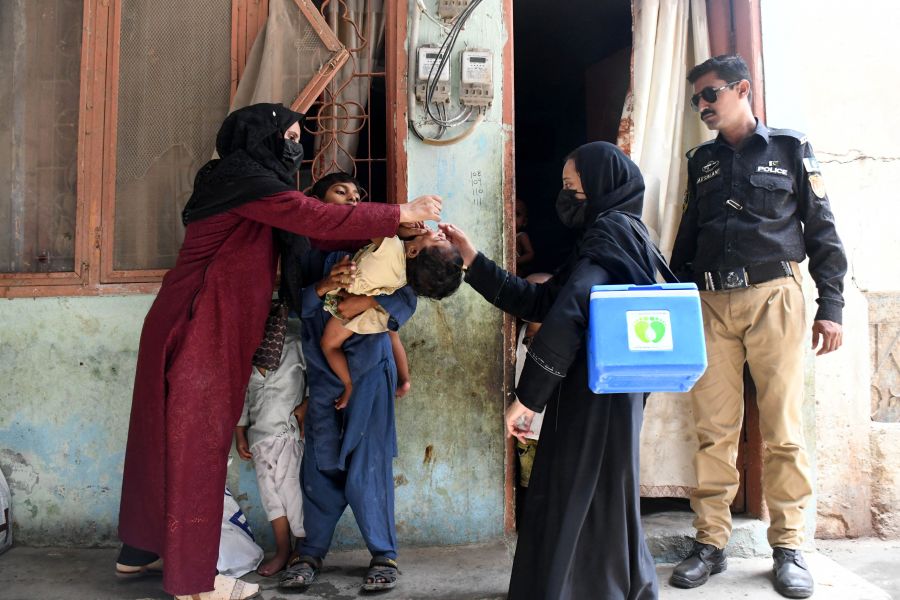
The remaining profiles, which constitute the large majority of applicants, require a closer examination of their individual circumstances. These include, for instance, education personnel, individuals involved in polio vaccination campaigns, individuals belonging to ethnic and religious minorities (Pashtuns, Baloch people, Ahmadis, Christians, Hindus, Shia Muslims including Hazaras), women, girls and children.
Additionally, the guidance analyses the situation of applicants who may be affected by indiscriminate violence in the context of an armed conflict. Notably, it is assessed that indiscriminate violence, mostly due to confrontations between the Pakistani armed forces and insurgent groups, takes place in Balochistan and South and West Khyber Pakhtunkhwa (KP), however not at a high level. In the rest of the country, there is no real risk for a civilian to be personally affected by such violence.
Finally, the guidance assesses that Internal Protection Alternative (IPA) may be applicable in the cities of Islamabad, Lahore, and Karachi, as the major urban and economic centres in Pakistan, depending on the profile and individual circumstances of the applicant.
This new guidance on Pakistan will extend to eight the number of countries covered by EUAA Country Guidance.
Asylum applications by Pakistani nationals August 2025 – July 2026
Between August 2025 and July 2026, Pakistani nationals lodged around 18,000 applications for international protection in the EU+, which is an 8% decreased compared to the preceding 12 months. The main receiving countries of Pakistani applications were Italy, Ireland, France and Greece. During the period, around 23,000 first instance decisions were issued with an EU+ recognition rate of 13%. At the start of July 2026, there were close to 24,000 cases still pending a decision at first instance.
Background
The country guidance documents provide country-specific, common analysis and guidance in relation to the assessment criteria of international protection needs established in the EU asylum acquis. In accordance with Article 11 of the EUAA Regulation, Member States have the obligation to take into account the guidance notes and common analysis when examining applications for international protection, without prejudice to their competence for deciding on individual applications.