

News
Press Release Published: 12 June 2026
EUAA welcomes the entry into application of the Pact on Migration and Asylum
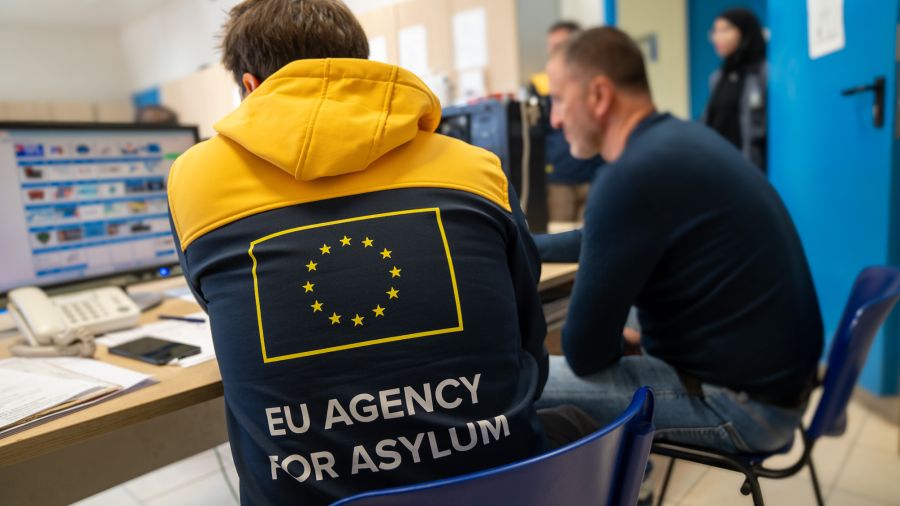
Today, the Pact on Migration and Asylum has entered into application. It represents a profound reform of the Common European Asylum System. The work of operationalising this reform is ongoing across the EU. The EUAA will continue to play a central role in these efforts.
Friday 12 June 2026 marks the end of a two-year transition period since the adoption of the 10 laws underpinning the Pact on Migration and Asylum. The European Union Agency for Asylum (EUAA) has been working intensely to support Member States in implementing different elements of the amended Asylum Procedure Regulation, the Asylum and Migration Management Regulation, the Qualification Regulation and the updated Reception Conditions Directive (2024). The Agency has also significantly contributed to preparing the new screening mechanism that will soon begin to apply at the EU’s external borders.
Commenting on this important milestone, the EUAA Executive Director Nina GREGORI remarked: “The journey started in 1999, as the European Council first conceived of a Common European Asylum System. The 2015-2016 migration crisis tested the system to its limits and highlighted the need for reform. Today marks an important milestone, but not the end of the road. We still have much work ahead of us.”
The EUAA’s contribution as part of an ongoing process
Over the last two years, the EUAA has been working closely with the European Commission, first to help develop and then help implement a Common Implementation Plan as part of an "EUAA Pact Programme". Under this programme, the Agency has developed or revised more than 60 practical guides and tools, carried out a thorough update of its training curriculum and supported the EU Institutions’ situational awareness work to help Member States manage asylum and migration under the twin pillars of responsibility and solidarity.
A significant amount of preparatory work has also taken place in the field, either to help national authorities clear backlogs ahead of the new rules, when requested by the Member States, or to help implement and test the reforms on the ground, with pilot exercises of the new screening mechanism taking place in Italy (e.g., for sea arrivals), Portugal (e.g., for air arrivals) and Romania (e.g., for land arrivals) – all in close collaboration with EU Agencies, particularly the European Border and Coast Guard Agency – Frontex.
Some of the highlights of the Agency’s work include:
- Laying the groundwork for the EU’s first Solidarity Pool – Using data exchanged under the EUAA Early warning and Preparedness System, the Agency helped the European Commission develop an accurate picture of Member States’ asylum and reception systems; to help the Commission determine the levels of migratory pressure EU countries face, as part of the first European Asylum and Migration Management Report (EAMMR).
- The first Union-wide list of Safe Countries of Origin – The Agency supported EU lawmakers in further refining the Asylum Procedure Regulation by providing impartial and objective information on a series of countries of origin. This supported the objective to reduce pressure on asylum systems by applicants coming from countries that do not generally generate protection needs.
- Ensuring asylum and reception systems are well prepared and can withstand times of pressure – The EUAA, together with the European Commission, helped national authorities in developing and enhancing their national contingency plans, with a comprehensive template and a manual on contingency planning.
- Information provision to asylum seekers – To enable applicants to understand the new rules, the Agency has developed over 30 information provision products in 64 different languages, available to national authorities in various formats, e.g. brochures, leaflets and posters. Once customised with their country-specific information, these will enable applicants to understand the new asylum and reception-related rules wherever they lodge their application.
Immediate Next Steps
With 12 June 2026 marking an important milestone, the European Commission has noted that implementation is ongoing and will continue to be monitored and reported on. The EUAA will closely follow and respond to the needs expressed by Member States, as national authorities continue to implement the reforms under the Pact.
The Agency will also continue to assist Member States to strengthen their capacity to anticipate and respond effectively to situations of disproportionate pressure and crisis, with the development of practical guidance and training. A dedicated Working Group, composed of Member States’ Experts, the European Commission and Frontex will assist in these endeavours. The Agency will also help Member States implement the EU’s first Solidarity Pool, which provides for a number of relocations of asylum applicants, through its first-ever multi-country Operational Plan, expected to be concluded soon, and based on lessons learned from the Voluntary Solidarity Mechanism (2022).
Additionally, the Agency will continue to strengthen its situational awareness work and expects to soon conclude a Working Arrangement with Eurostat. This will support the production of European statistics on international protection, reduce the administrative and reporting burden on EU+ countries, and reinforce the Agency’s role as the key conduit for international protection data in Europe.
Timeline of the evolution the EU's Common European Asylum System