

Meet EUAA’s operations officers: Nothing could be done if there was no collective work
Jessica Gonzales and Marios Erotokritou both work as operations officers at the EUAA First Operational Response Unit (FORU), respectively in Belgium and Moldova. The FORU is an intervention unit that provides a comprehensive first response to Member States' asylum and reception systems. In this interview, Jessica and Marios share what being an operations officer in Belgium and Moldova entails and what inspired them to join the European Union Agency for Asylum (EUAA) in the first place.
Can you introduce yourself? What is your educational background?
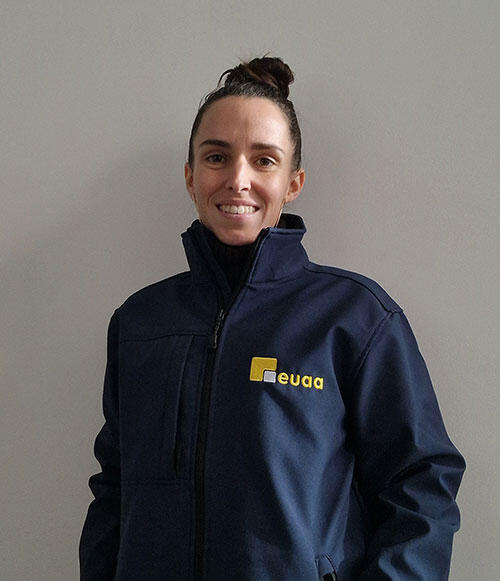
Jessica Gonzalez: My name is Jessica Gonzalez. I have a bachelor's and a master's degree in International Development and a second master's degree in Migration Law.
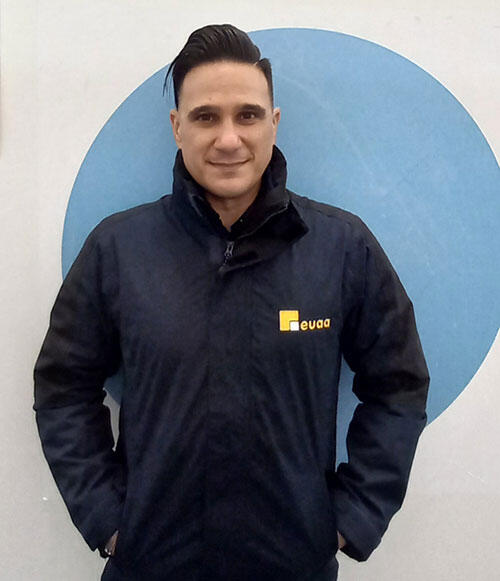
Marios Erotokritou: My name is Marios Erotokritou and I have been working with the EUAA since November 2019. I graduated from the University of Leeds with a bachelor's in European Politics, a master’s in international studies, and a master’s in European Parliamentary Studies.
What is your background in the field of asylum and reception?
JG: I took my first steps in the field of asylum and reception in 2007. In Europe, I worked as an information provision expert in disembarkation sites in the South of Italy as a legal advisor in reception centres, and as a social worker for an NGO working with vulnerable persons. At the international level, I worked with NGOs supporting internally displaced persons (IDPs) in conflict and post-conflict contexts. Some of the organisations I have worked with are the Jesuit Refugee Service, the Italian Council for Refugees, the Bangladesh Cultural Association (ACB), the United Nations High Commissioner for Refugees (UNHCR), and the Médecins Sans Frontières (MSF).
ME: My first interaction with asylum and migration on a theoretical level was when writing my thesis for my master's in European Parliamentary Studies, which focused on the migration and border control policies of the European Union (EU). The motivation for my thesis was linked to my six-month term in the European Parliament where I was covering the Committee on Civil Liberties, Justice and Home Affairs (LIBE), extensively covering the migration and border control policies of the EU. Furthermore, I spent six months working for the Permanent Mission of Greece to the United Nations (UN), where I was covering the Financial, Environmental, and Migration Committee. In 2014 and 2015, I worked as a media reviewer, where I was extensively covering the migration crisis at its peak, through the lens of mass media. Since November 2019, I started working with the EUAA as a caseworker in Cyprus, where I had the opportunity to provide online support to the Lithuanian operations, as well as to support, for a short period of time, the Pournara reception centre as a vulnerability officer. Since April 2022, I have been working as an operations officer for the First Operational Response Unit. I also supported the Romanian Operations for five months as a flow manager and at the registrations for Temporary Protection. Since the beginning of October, I have been supporting the Moldovan Operations promoting the “EU+ Air Transfer Programme”, designed to facilitate the temporary resettlement of Ukrainian refugees residing in Moldova, to 12 EU countries, plus another four belonging to the European Economic Area (EEA).
What motivated you to apply for a role within the Agency?
JG: In 2016 I was working as a legal adviser at disembarkation sites in the South of Italy. It was in this context that I started to get familiar with the EUAA’s work. I decided to apply because I was really intrigued and interested to work with the Agency in supporting the Italian authorities with the implementation of the Common European Asylum System (CEAS) and promote its standardised application on an institutional level. I started working as an interim with the first interims deployment scheme within the Italian operations in 2018, and I have been working with the Agency ever since.
ME: The challenge of the role and the opportunity of being in the field and facing the challenges of migration in real time and in a pragmatic way.
Can you describe your daily tasks and activities?
JG: I'm currently working as an operations officer in the Belgium Operations and I'm supporting the implementation of the Belgium Operational Plan (OP) as a measure coordinator. Previously, I was supporting the implementation of the OP 2022 as a field support officer. In Belgium, the EUAA has agreed to an OP to support the Federal Agency for the reception of asylum seekers (Fedasil). In the framework of the current OP, the EUAA is providing support to Fedasil through the deployment of external experts in several reception centres. My daily tasks are mostly related to following up on the activities, the daily contact with colleagues on the field, and the interaction with the national authority for a proper implementation of the OP.
ME: The tasks and activities in each operation differ. Therefore, I will focus on my current daily tasks and activities in Moldova. The main task is the information provision regarding the “EU+ Air Transfer Programme” funded by the European Commission to Ukrainian refugees currently residing here in Moldova and seeking a way to move to Europe but that are lacking financial resources. Therefore, the main task is to keep remain in contact with different refugee asylum centres and local authorities to reach as many Ukrainian refugees living in the centres and private accommodations as possible, to inform them about the programmes across Moldova. In the case of Moldova, the experts need to be ready to provide answers regarding the program and alleviate the concerns of people interested in leaving for Europe in order to restart their lives. Furthermore, the expert needs to be well-trained in Temporary Protection and able to elaborate on the added-value of the activation of the Directive and its benefits.
What do you think is the impact of your work?
JG: The support provided to the Belgium by the Agency is much appreciated by the authorities. Our colleagues – the experts deployed – are sharing their knowledge and expertise and learning from their counterparts working in the reception centres. The asylum related part of the CEAS is structured in procedures that are detailed in its key instruments. When it comes to reception, we have procedures in place and detailed in the Reception Directive but working and living in a reception centre is not always about procedures. The human dimension, the relationships, and understanding of each other (staff and residents) play a key role in a well-functioning reception centre. Based on this assumption, I think our experts have been able to build a trusted relationship, both with the residents of the centre where they work and with the “in-house” staff. Through the deployment of experts and interpreters, the delivery of containers, and the provision of training, the EUAA is supporting the authorities in responding to their needs including for additional capacity in the national reception system.
ME: Talking about my work is something that I always avoid. I prefer to talk about the team working in an operation or the field, as nothing could be done if there were no collective work. Regarding Moldova, the main impact of the team's work is the physical presence of the EUAA and the satisfaction we expressed by the Moldovan local authorities who feel that they are not working alone in this crisis, and are receiving support from the EU by managing to get in touch with key people working for the governmental authorities.
What are the biggest challenges and opportunities for the First Operational Response Unit?
JG: The challenges are linked to the nature of the unit which must provide Member States in immediate need of support with a fast, efficient, and operational response in a short amount of time. This challenge is also an opportunity for the Agency to build on its experience and expertise with the aim of improving its operational response capacity and modalities.
ME: From my point of view, the biggest challenge of the FORU team is to take the opportunity and fulfil its greatest ambition by expanding to as many Member States as possible, manned with well-trained experts, and by being in a position to predict possible migration crises and being the first to provide substantial support to the countries in need of support. FORU has been on a very good trajectory by effectively responding to the support needs of many EU Member States. With a strong presence of FORU in the Member States, it would be a great opportunity to start driving a common European line in resolving and tackling migration crises.
Could you share with us one story from your experience working with the EUAA that had a great impact on you?
JG: Supporting the promotion of a standardised application of the CEAS and being able to see the result of this is really rewarding, both from a personal and professional point of view.
ME: Every position in which I had the honour of working with the EUAA was a unique experience. The greatest experience is having the opportunity to work in the field and have a daily interaction with many people. The greatest impact this had on my personality is that it made me more patient, increased my soft skills, and I learned how to appreciate more what we take for granted, such as peace, freedom of speech and movement, and opportunities for a better future.