

An Rita Buys
Coordinating Officer
The European Union Agency for Asylum (EUAA) supports Belgium through the 2025-2026 Operational Plan, aiming at strengthening the national reception and asylum systems in line with the Common European Asylum System (CEAS).
The EUAA’s operational support focuses on two key areas:
- Asylum Support, to assist with registrations of applicants for international and temporary protection, the processing of asylum applications and Dublin cases, as well as the development of frameworks at central level.
- Reception Support, to increase national capacity in the reception system through the development of tools and operational frameworks on targeted projects (including for the harmonisation of arrival processes and vulnerable persons), support in information and data management, and the provision of interpretation services.
The EUAA’s operational support is foreseen to last until 31 December 2026.
The EUAA has been supporting Belgium in the area of reception since 2022. In close collaboration with the Belgian federal reception agency, Fedasil, the Agency focused on addressing immediate needs across reception centres, and gradually shifted its focus to longer-term structural improvements, ensuring alignment with CEAS. As of 2025, the EUAA’s support was extended to also support asylum procedures in cooperation with the Immigration Office (IO) and the Commissioner General for Refugees and Stateless Persons (CGRS).
Key moments:
- 16 December 2021: Signature of the 2022 Operational Plan and launch of the Agency’s operational and technical support to Belgium.
- 2022-2024: Agreement on consecutive Amendments, extending support to reception services across multiple reception centres in the country - covering social work, information provision, support to Unaccompanied Children (UACs), interpretation, Temporary Protection - and targeted measures to enhance institutional capacity and improve reception standards, particularly for vulnerable individuals.
- 18 December 2024: Signature of the 2025-2026 Operational Plan, initiating support to the Immigration Office and the Office of the Commissioner General for Refugees and Stateless Persons covering asylum while maintaining support to Fedasil on reception.
EUAA experts at the Brussels Info Point
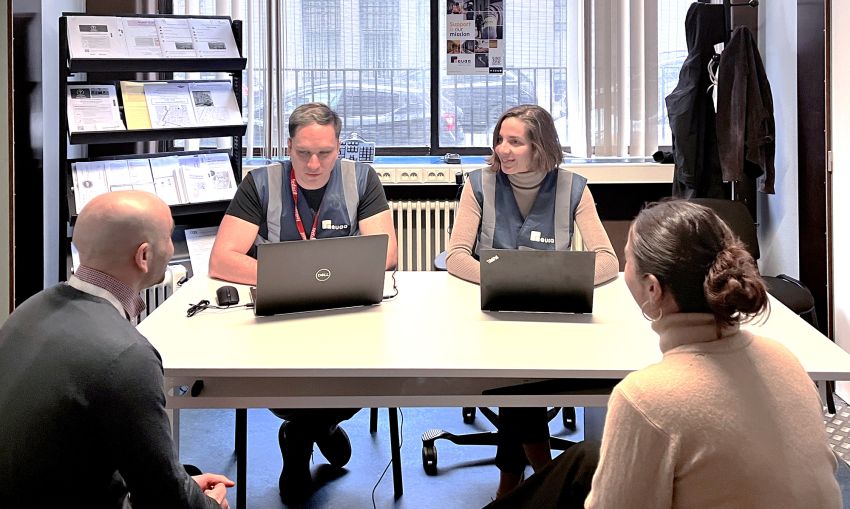
In 2025, 6 921 applicants for international and temporary protection were registered, and 2 823 applicants were interviewed at first instance with EUAA support.
| Main National Partners | |
|---|---|
| Federal agency for the reception of asylum seekers | Federal agency for the reception of asylum seekers or Fedasil, is responsible for the reception of applicants for international protection in Belgium. It guarantees conformity in reception standards at reception facilities. Fedasil also coordinates the voluntary return programmes in Belgium. |
| Immigration Office (IO) | The Immigration Office is responsible for the registration and lodging of asylum applications for international protection in Belgium. |
| The Office of the Commissioner General for Refugees and Stateless Persons (CGRS) |
The Office of the Commissioner General for Refugees and Stateless Persons is the central asylum authority in Belgium. It is responsible for conducting the asylum procedure, issuing certificates and civil status documents to recognised beneficiaries of international protection and stateless persons, and cooperation on European and international dimensions of asylum policy. |
Nadia Gmira-Verots
Coordinating Officer
The European Union Agency for Asylum (EUAA) supports Bulgaria through the 2023–2026 Operational Plan to increase institutional and response capacity of the national authorities in the field of asylum and reception in line with the Common European Asylum System (CEAS).
Through deployment of Asylum Support Teams (ASTs), the EUAA provides support the national asylum and reception authorities in the following areas of:
- Asylum, through strategic planning, management frameworks and quality assurance, facilitating access to the asylum procedure, assisting with the processing of asylum applications and Dublin cases, digitalisation support, providing interpretation services, and delivering training and operational capacity building to the national authorities.
- Reception, through site and accommodation management, provision of modular reception units, enhancement of reception standards and monitoring, assistance to vulnerable groups including Unaccompanied Children (UACs), and delivery of training, operational capacity building to the national authorities and interpretation services.
The EUAA’s operational support is foreseen until 31 December2026.
Since 2013, the EUAA (former EASO) has supported Bulgaria through various Operating Plans and Special Support Plans, providing technical and operational assistance to strengthen its asylum and reception systems in line with the Common European Asylum System (CEAS). Support has included asylum procedures, delivery of core training, identification and referral of vulnerable persons, interpretation services, and assistance in reception management.
In 2021-2022, increased arrivals and the influx of displaced persons from Ukraine put additional pressure on Bulgaria’s asylum and reception systems, prompting authorities to request EUAA support on 27 May 2022. Since then, the Agency has focused on enhancing institutional capacity, quality assurance in asylum procedures, digitalisation of case management, staff training, and strengthening reception services and infrastructure.
Key moments:
- 2013–2018: The EUAA (former EASO) provided support through Operating Plans and Special Support Plans, covering asylum procedures, training, identification of vulnerable persons, and reception management.
- May 2022: Bulgarian authorities formally requested EUAA support due to increased arrivals and asylum applications, including displaced persons from Ukraine.
- 2 September 2022: Signature of the first 2022 Operational Plan, supporting Bulgaria in implementing the Temporary Protection Directive and CEAS, focusing on training, professional development, and administrative capacity in digitalisation.
- 31 December 2022: Signature of the Amendment to the 2022 Operational Plan to extend the implementation period to 31 December 2023. The 2022-2023 Operational Plan included activities in the areas of reception and asylum, while also maintaining support for the implementation of the Temporary Protection Directive.
- June 2023: Signature of the 2023–2024 Operational Plan, following the Bulgarian authorities request for additional support to improve frontline and structural capacity in asylum and reception, focusing on asylum case processing, Dublin procedures, quality assurance, training, and strengthening reception management, including infrastructure and support services.
- December 2024: Signature of Amendment of 2023-2026 Operational Plan to increase institutional and response capacity of the national authorities in the field of asylum and reception and extend EUAA support until December 2026.
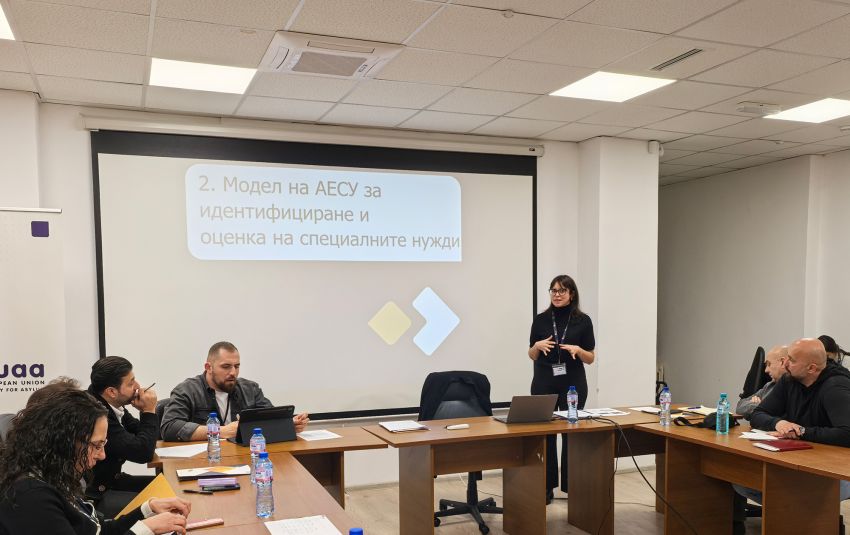
Workshop on the identification of vulnerabilities and special needs hold in February 2026.
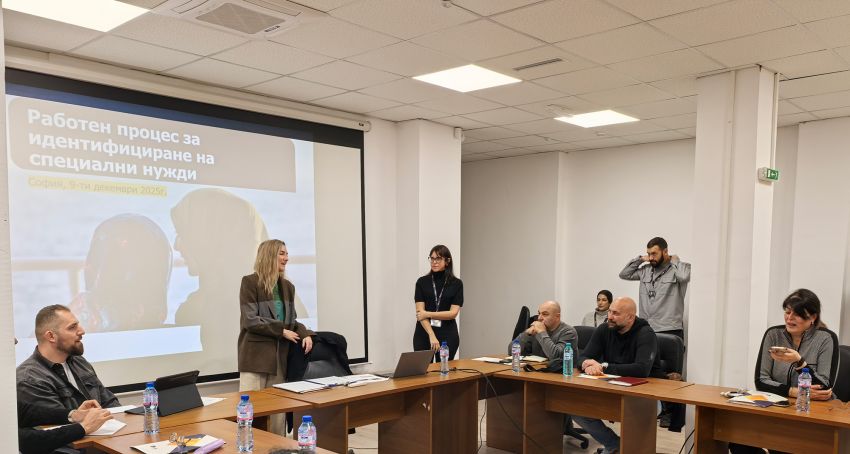
In 2025, EUAA provided 316 initial information session to new arrival is SAR reception facilities, as well as 26 awareness-raising session. EUAA also supported the process of Dublin cases . (Or EUAA undertook 10 575 actions in support to Dublin cases).
| Main National Partners | |
|---|---|
| Ministry of Interior |
The Ministry of Interior is the central governmental authority for home affairs. |
|
State Agency for Refugees (SAR) at the council of Ministers
|
The State Agency for Refugees (SAR) at the Council of Ministers is the authority responsible for the management, coordination and implementation of the state policies relating to granting refugee and humanitarian status to third-country nationals in the Republic of Bulgaria. SAR is also responsible for the management and coordination of the reception system for asylum seekers. SAR is also responsible for the management and coordination of the reception system for applicants for international protection, managing the registration, accommodation, and integration of asylum seekers. The agency’s structure includes central administration and regional directorates, ensuring coordination between policy development, case processing, and on-the-ground management of reception facilities. |
Francesco Torcoli
Coordinating Officer
The European Union Agency for Asylum (EUAA) supports Cyprus through the 2025 – 2026 Operational Plan, with the aim to reinforce the national asylum and reception systems and strengthen the capacity of the national authorities in line with the Common European Asylum System (CEAS).
The current Plan envisages the provision of support to the Cypriot authorities through the deployment of experts and interpreters in the areas of:
- Asylum support, regarding access to the asylum procedure and temporary protection, processing of applications for international protection at first and second instance, Dublin cases and relocation activities under the Voluntary Solidarity Mechanism, as well as quality assurance and training.
- Reception support, namely support to the management and operation of reception centres, provision of support to applicants with special needs and material support in reception sites, alongside quality assurance and training.
The EUAA’s operational support is foreseen until 31 December 2026.
The EUAA has been supporting Cyprus since 2014, upon agreement on the first Special Support Plan. Since then, the Agency has established a long-term cooperation with the Cypriot authorities in the areas of both asylum and reception and has witnessed a significant expansion of its operational support in response to increasing pressure on the Cypriot asylum and reception system.
Key moments
- 5 June 2014: Signature of the first Special Support Plan and launch of operational and technical support to Cyprus.
- 2014-2020: Continued support across asylum and reception, including capacity building, through consecutive Special Support Plans and Operating Plans.
- 17 December 2020: Signature of the 2021 Operational Plan focused on access to procedure, backlog reduction at first and second instance, reception support at the Pournara First Reception Centre and strengthening quality of vulnerability and reception processes.
- 13 December 2021: Signature of the 2022-2024 Operational Plan, focusing on asylum (registration, first instance processing, relocation), reception and quality assurance at a horizontal level, involving an increased engagement of new stakeholders. Through a consequent Amendment, the EUAA also initiated support for Temporary Protection in terms of registrations and information provision.
- 17 December 2024: Signature of the 2025-2026 Operational plan
- 17 September 2025: More than 3000 asylum seekers have been relocated voluntarily from Cyprus to EU Member States.
EUAA Reception Centre in Pournara
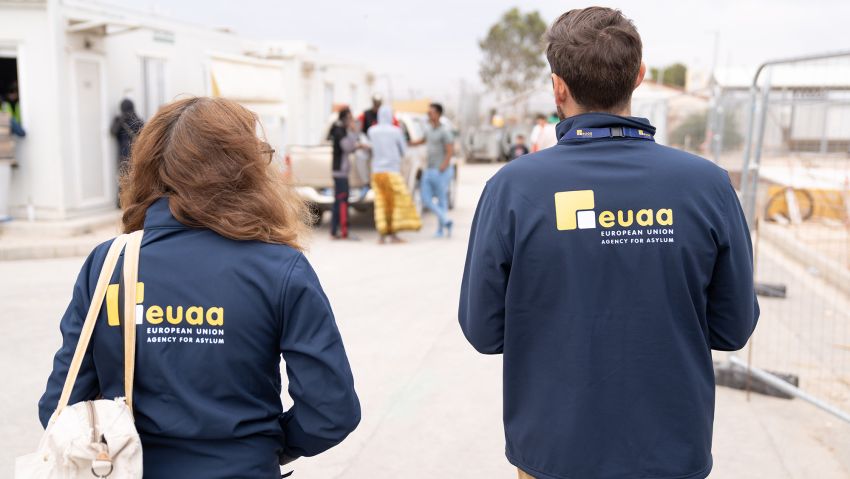
In 2025, 2 336 individuals received direct information provision on asylum procedures
| Main National Partners | |
|---|---|
| Deputy Ministry for Migration and International Protection (DMMIP) | The mission of the Deputy Ministry of Migration and International Protection of Cyprus is the formulation, implementation and management of the national strategy on migration and asylum with respect to EU law. This includes asylum procedures, the management and operation of reception and accommodation centres for applicants of international protection, the development of an integration strategy for third-country nationals and the conclusion of bilateral agreements with third countries on issues of migration, asylum and returns. |
| Cyprus Asylum Service (CAS) |
The Asylum Service of Cyprus is mainly responsible for the examination of applications for international protection at first instance, the coordination and supervision of the operation of reception centres and the implementation of the Dublin Regulation in Cyprus. Additionally, it prepares draft bills, participates in EU working groups and coordinates the Services involved in asylum-related matters. |
| International Protection Administrative Court (IPAC) |
The International Protection Administrative Court has exclusive jurisdiction to adjudicate on first instance decisions concerning applications for international protection at appeal level, in Cyprus. |
| Aliens and Immigration Unit (AIU) of the Cyprus Police | Primary activities of the Aliens Immigration Unit of the Cyprus Police involve some of the following: border and crossings control, combating trafficking in human beings, detecting of irregular migrants, registering third-country nationals for residence permits, management and operation of the Detention Centre for Irregular Migrants in Cyprus and returns of irregular migrants. |
Bart Vandenbroucke
Coordinating Officer
The European Union Agency for Asylum (EUAA) supports Germany through the 2024-2027 Operational Plan in strategic planning and management frameworks, and in the area of access to the asylum procedure, in line with the Common European Asylum System (CEAS). Through the deployment of a dedicated team of EUAA experts, the Agency supports the national authorities in the following areas:
- Project and change management
- Administration and lodging of applications for international protection
- Processing of cases under the Dublin procedures.
The EUAA’s operational support is foreseen until 31 December 2027, with the exception of support in Dublin procedures that was completed on 31 December 2025.
The EUAA launched its first Operations in Germany in 2024, following the request of the German authorities for support in the management of cases under the Dublin III Regulation. The first Operational Plan 2024-2025 focused on increasing the capacity of the national asylum authorities in the processing of Dublin cases. In 2025 and as part of the first Amendment of the current 2024-2027 Operational Plan, the EUAA expanded its support to additional areas of asylum procedures.
Key moments:
- 20 June 2024: Signature of the first Operational Plan 2024-2025, foreseeing support in the processing of Dublin cases, mainly of outgoing take back and information requests.
- 12 August 2025: Signature of the first Amendment to the Operational Plan 2024-2027, foreseeing the phase-out from Dublin support by December 2025 and expanding EUAA’s support in the areas of project and change management, and administration and lodging of applications for international protection.
EUAA meeting in Germany

In 2025, the EUAA supported 16 084 individuals with the processing of Dublin information requests.
| Main National Partners | |
|---|---|
| Federal Ministry of the Interior and Community (BMI) | The Federal Ministry of the Interior and Community (BMI) and its executive agencies cover a broad range of tasks and activities, ranging from civil protection and integration to security. BMI also designs the Federal Government’s migration policy, sets laws on residence, freedom of movement and asylum at national and European level, and handles issues related to returns of third-country nationals. |
| Federal Office for Migration and Refugees (BAMF) | The Federal Office for Migration and Refugees (BAMF) is the national authority for migration and integration in Germany. It is responsible for the processing of asylum applications, ensuring refugee protection and promoting their integration in Germany. |
Jette Christiansen
Coordinating Officer
The European Union Agency for Asylum (EUAA) supports Greece through the 2025-2026 Operational Plan, aiming to strengthen the national asylum and reception systems in line with the Common European Asylum System (CEAS).
- Through the deployment of experts and interpreters, the EUAA supports the national asylum and reception authorities in the following areas:
- Asylum, through the registration of applications for international and temporary protection, the processing of asylum applications at first and second instance, and Dublin cases, relocation, quality assurance and training.
Reception, through the provision of support at central level (including coordination of procedures, quality assurance and training) and across reception sites (including site management, registrations, case management, information provision), and with specific support on the protection of vulnerable applicants and Unaccompanied Children (UACs).
The EUAA’s operational support is foreseen until 31 December 2026.
Since 2011 the EUAA (former EASO) has been actively supporting Greece in strengthening its asylum and reception systems and has established a long-standing cooperation, which has evolved into one of the Agency’s most comprehensive and sustained operational engagements.
The EUAA’s support has been instrumental in the development and reinforcement of Greece’s asylum and reception services, including the Asylum Service, the Appeals Authority, and the Reception and Identification Service (former First Reception Service). The Agency also deployed Asylum Support Teams (ASTs) to assist national authorities through technical expertise, capacity building, training and operational support.
Following successive requests by the Greek Government, the scope of the EUAA’s involvement has expanded over the years encompassing a wide range of strategic, procedural and operational areas, including the implementation of the Dublin Regulation, relocation mechanisms, reception facility management, guardianship systems for Unaccompanied Children (UACs), and the development of national strategies in line with the CEAS.
Key moments:
- 1 April 2011: Signature of the first Operating Plan and launch of the EUAA’s (former EASO) operational engagement in Greece, supporting the establishment of core asylum and reception structures.
- 2012-2014: Agreement on consecutive Operating Plans and continuous support to Greek officials with training on the establishment of nationality (in close cooperation with Frontex), on the collection and analysis of statistical data, in the field of Country of Origin Information (COI), as well as in EU funding.
- 2015-2016: Continued support through the Special Support Plan and the EASO Hotspot Operating Plan, covering among others training of staff, quality of procedures and enhanced support on asylum, including relocation, Dublin procedures and the initiation of processing asylum applications.
- 2017-2019: Extension of operational support across asylum and reception through annual Operating Plans.
- 2020-2021: Expansion of the Agency’s operational presence and geographical coverage under the Operational and Technical Assistance Plan, introducing support among others to the Voluntary Relocation Programme from Greece to EU+ Member States during the COVID-19 emergency (2020) and support to the Special Secretariat for the Protection of Unaccompanied Minors (SSPUAM) and Unaccompanied Children (UACs) (2021) and which has gradually become one of the main targeted areas of support in Greece.
- 2022-2024: Implementation of the 2022-2024 Operational Plan, extending support across asylum and reception, including Temporary Protection, as well as on Unaccompanied Children (UACs) and other vulnerable groups.
- 18 December 2024: Signature of the 2025 Operational Plan, amended to the current 2025-2026 Operational Plan on 23 December 2025, which extended EUAA support until December 2026.
EUAA staff visit at the CCAC Lesvos
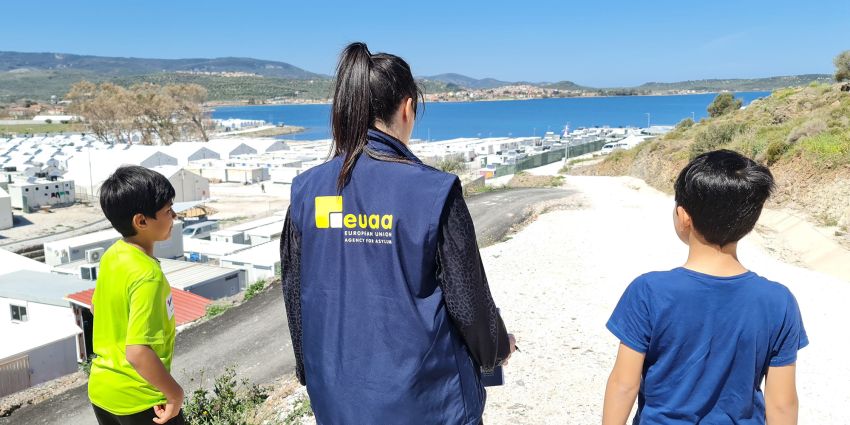
In 2025, 13 845 applicants covered by an asylum interview conducted with EUAA support
| Main National Partners | |
|---|---|
| Ministry of Migration and Asylum (MoMA) | The Greek Ministry of Migration and Asylum plans and implements the national migration policy regarding the legal entry, residence and social integration of third-country nationals. This includes the identification and reception of third country nationals entering without legal formalities and the design and implementation of the national policy on asylum or other forms of international protection. The Ministry is responsible for the implementation of EU and international laws and international conventions on migration and international protection while coordinates the co-responsible national services at central and regional level. |
| General Secretariat for Migration Policy | The General Secretariat of Migration Policy plans and implements policies regarding legal migration, international protection and social integration in Greece. It deals with the management of co-financed resources for the implementation of migration policies and oversees the coordination and cooperation between the departments under its’ jurisdiction. In parallel, the General Secretariat takes all necessary steps to enhance cooperation with stakeholders and partners at national and international level. |
| Greek Asylum Service (GAS) | The objective of the Greek Asylum service is the implementation of laws on asylum and other forms of international protection regarding foreign nationals and stateless persons in Greece. The Asylum Service receives, examines, and decides on all applications for international protection lodged within Greece. Additionally, it cooperates with relevant international organisations and European Union institutions. |
| Appeals Authority (AA) | The Appeals Authority examines, at second instance, (quasi-judicial) appeals against first-instance decisions issued by the Greek Asylum Service on applications for international protection. |
| General Secretariat for the Reception of Asylum Seekers (GSRAS) | The General Secretariat for the Reception of Asylum Seekers is responsible for planning and supervising the implementation of the reception policy in Greece. Its mission is to establish humane and respectful reception conditions that abide with international laws for third-country nationals through the country. It also initiates collaborations with competent services and stakeholders and seeks funding for projects in key areas of interest. |
| Reception & Identification Service (RIS) | The mission of the Reception and Identification Service is to manage third country nationals or stateless persons who cross the Greek borders without legal documents and/or procedures, in an effective manner and under conditions respectful to their dignity, by placing them in reception procedures. |
| General Secretariat for Vulnerable Persons and Institutional Protection (GSVPIP) | The General Secretariat for Vulnerable Persons and Institutional Protection is the competent authority for all issues regarding unaccompanied or separated children, and vulnerable third-country nationals or stateless persons, who are in Greece. It plans, implements and supervises the national strategy for their protection. The responsibilities of the General Secretariat concerning Unaccompanied Children (UACs) include social integration, safeguard of the institutional protection, management of accommodation and relocation requests, evaluation and supervision of housing facilities. |
| EKKA (National Centre for Social Solidarity) | The National Centre for Social Solidarity (NCSS) operates in the context of social protection aiming to effectively address urgent social issues and crises. It coordinates a network of services to provide protection and psychosocial support to individuals, families and population groups that face poverty or social exclusion. |
Stefano Pes
Coordinating Officer
The European Union Agency for Asylum (EUAA) supports Italy through the 2025–2026 Operational Plan to strengthen the national asylum and reception systems in line with the Common European Asylum System (CEAS). Under this plan, by deploying experts and interpreters, the EUAA supports Italy in the following areas:
- Asylum, through facilitating access to the asylum procedure, processing of asylum applications (first and second instance), supporting Dublin-procedure cases, assisting with the Voluntary Solidarity Mechanism (VSM), providing quality assurance and training.
- Reception, through supporting the management of the reception system, including the allocation of applicants and beneficiaries, and helping to ensure the quality of reception standards and accommodations.
The EUAA’s operational support is foreseen until 31 December 2026.
Since 2013, the EUAA (former EASO) has supported Italy with technical and operational assistance to strengthen its asylum and reception systems in line with Common European Asylum System (CEAS) standards.
Over the years, this support has expanded at the request of the Italian authorities to include registration and processing of international-protection applications, Dublin procedures, improvements to the management of reception capacity, particularly for vulnerable groups, extensive quality assurance and capacity-building through training, guidance, and tool developments. Asylum Support Teams (ASTs) composed of experts seconded from Member States provide much of this frontline support, working alongside national authorities while ensuring that responsibility for decision-making remains with the Italian administration.
The assistance is designed to support, but not replace, Italian national authorities, enhancing resilience and consistency within the framework of the CEAS.
Key moments:
- June 2013: Signing of the first Special Support Plan marking the beginning of EUAA operational support in Italy. The Plan focused on data collection and analysis, Country of Origin Information (COI), Dublin procedures, reception system management, emergency capacity, training of independent judiciary, and professional development of the National Asylum Commission.
- 2015-2016: Continued support through the Hotspot-Relocation Operating Plan including joint processing of asylum cases, registration of applications for relocation and handling Dublin ‘take charge’ requests.
- 2017–2019: Expansion of operational support across asylum and reception through annual operating plans, including COI activities and capacity building also for the Ombudsperson for Children and Adolescents.
- 2020: Reduced operational deployments due to decreased backlog and arrivals. However, the COVID-19 emergency brought to the signature of the Amendment to the 2020 Operating Plan.
- 2021: Started collaboration with the Italian Ministry of Justice, reflected in a new Operating Plan, with the deployment of experts in specialised sections of the tribunals and at the Supreme Court of Cassation and its Prosecutor Office.
- 2022–2024: Three-year Operational Plan expanding support for harmonised access to asylum, Dublin and first-instance procedures, judicial backlog management, reception system quality and sustainability, coordination of EU solidarity mechanisms, and post-SAR disembarkation activities. The first amendment to the Operational Plan introduces support for the implementation of the Temporary Protection Directive (TPD).
- September 2023: Following the migratory crisis in Lampedusa with massive influxes of sea arrivals, the European Commission launched the 10-point plan for Lampedusa, including enhanced support by the EUAA to Italian authorities for the transfer of people out of the island and to apply swift border and accelerated procedure.
- April 2024: Enhanced the support at local level for access to the procedure (asylum registrations, information, pre-identification of vulnerabilities), processing of cases at first instance in Territorial Commissions, and reception management.
- December 2024: Signing of the 2025 Operational Plan, amended to the current 2025-2026 Operational Plan in December 2025 to ensure continued operational support in asylum procedures (including to first instance personal interview) and reception.
- 10 November 2025: Extension of the 2025 Operational Plan until December 2026.
EUAA office in Lampedusa, inaugurated in February 2026
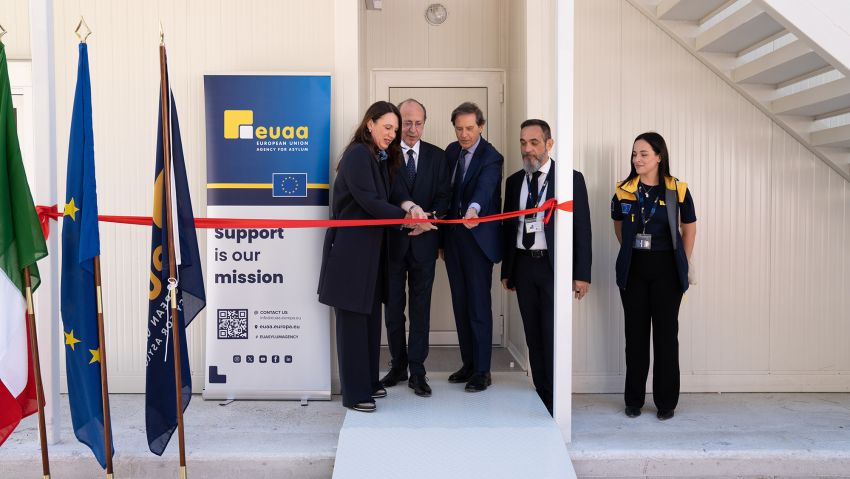
In 2025, EUAA supported the registration of 25 584 persons in Italy, and supported 12 064 information provision sessions in support to disembarkation and asylum procedure at Immigration Offices
| Main National Partners | |
|---|---|
| The Department for Civil Liberties and Immigration | The Department for Civil Liberties and Immigration, within the Ministry of Interior, is responsible for the organisation of the assistance and reception of irregular migrants, of applicants for international protection and beneficiaries of international protection. At local level, the Prefectures (Prefetture) are responsible for the management of all reception centres in those provinces where centres are present. |
| The Department for Public Security | The Department for Public Security, within the Ministry of Interior, is responsible for the coordination of all activities related to the management of order and public security, technical and operational coordination of the police forces, the directorate and administration of State Police and the management of technical support. At local level, the Immigration Offices (Questure) have provincial jurisdiction |
| The National Asylum Commission (NAC) | The National Asylum Commission (NAC), under the Department for Civil Liberties and Immigration, is responsible for the coordination of the Territorial Commissions (TCs), for the Country-of-Origin Information (COI) Unit, the provision of guidelines and training of TCs’ staff and for the management of database on applicants for international protection. Determination of international protection is carried out by the Territorial Commissions, while status revocation and termination decisions are issued by the National Asylum Commission. |
| The Specialised Sections on Immigration and International Protection Tribunals | The Specialised Sections on Immigration and International Protection of Tribunals are responsible for immigration, international protection and free movement of EU citizens in 26 Tribunals, managing asylum seekers’ appeals against decisions issued by the Territorial Commissions. |
| The Supreme Court of Cassation | The Supreme Court of Cassation oversees ensuring the observance and harmonised interpretation of the law, as well as compliance with the limits of the various jurisdictions. |
Bart Vandenbroucke
Coordinating Officer
The EUAA supports Ireland through the 2025-2027 Operational Plan, aiming to improve the processing of applications for international protection at appeal level (second instance) for the International Protection Appeals Tribunal (IPAT) and the Tribunal for Asylum and Returns Appeals (TARA) in light of the implementation of the EU Pact on Migration and Asylum. For this purpose, EUAA experts and interpreters are deployed to support the responsible national authorities in the following areas:
- Supporting the processing of asylum applications at second instance to IPAT and TARA
- Providing interpretation services for hard to source languages
- Supporting quality management activities for TARA personnel
- Enhancing capacity on countries of origin (COI) pending relevant consultations with the national authorities
The EUAA’s operational support is foreseen until 31 December 2027.
The EUAA’s support to Ireland began in 2025, in response to the pressure placed on the asylum system and particularly on the processing of asylum applications at second instance (appeals).
Key moments
- 9 September 2025: Signing of the first 2025-2026 Operational Plan focusing on the processing of asylum applications at second instance
- June 2026: Signing of the first Amendment to the 2025-2027 Operational Plan aiming to extend support at second instance introducing support to TARA for the implementation of the Pact
EUAA first meeting in Ireland

In 2025, the EUAA signed the first Operational Plan with Ireland and supported 261 appellants with the processing of their cases at second instance.
| Main National Partners | |
|---|---|
| Department of Justice, Home Affairs and Migration (DOJ) | The Department of Justice, Home Affairs and Migration is responsible for public policy regarding security of the State and public safety in Ireland. This includes the prevention and detection of crime, the administration of justice, the management of migration and international protection processes, the provision of important regulatory services and ongoing reform of civil and criminal law. |
| International Protection Appeals Tribunal (IPAT) | The International Protection Appeals Tribunal is the competent authority for the determination of international protection appeals related to asylum procedures in Ireland. |
Ingrida Diurbeiko
Coordinating Officer
The European Union Agency for Asylum (EUAA) supports Lithuania through the 2025–2026 Operational Plan, with the aim to increase the institutional capacity of the Lithuanian asylum and reception authorities. Building on the achievements of the 2023–2024 Operational Plan, by deploying Asylum Support Teams (ASTs), the EUAA supports the national asylum and reception authorities in the following areas:
- Asylum and Reception, through assistance in reinforcing case management and contingency planning, designing of self-monitoring mechanisms to assess and improve reception conditions, and supporting the adaptation of national procedures and SOPs, with a particular focus on vulnerable groups
- Capacity Building on Asylum and Reception, through training based on the European Asylum Curriculum, study visits and thematic workshops and the sharing of good practices aimed at enhancing the skills and knowledge of Lithuanian asylum officials, ensuring sustainable internal expertise.
The EUAA’s operational support is foreseen until 31 December 2026.
Since 2021, the EUAA has been supporting Lithuania with technical and operational assistance to strengthen its asylum and reception systems in line with the Common European Asylum System (CEAS), following a sharp increase in irregular migration and asylum applications that put pressure on national infrastructure. Over time, this support evolved. After initial assistance focused on first‑line reception and case backlogs, the cooperation matured into a more structural partnership, including support for the design of a dedicated reception agency, adaptation of national reception procedures including vulnerability screening and information provision, capacity building through training, and interpretation services.
Key moments:
- July 2021: First Operational Plan between Lithuania and the EUAA signed, aiming to improve efficiency of asylum procedures and management of first line reception.
- September 2021: Extended support until 30 June 2022 through the amendment to the Operational Plan, including technical expertise for designing and planning new reception facilities as well as managing reception facilities, with dedicated support for vulnerable asylum seekers.
- June 2022: The second Operational Plan continues the support to reception sites with information provision, interpretation, vulnerability screening, and reception‑related training and includes a technical support measure to conceptualise the design of a new national Reception Agency.
- July 2023-December 2024: Third Operational Plan focused on the strategic conceptualization, design, and development of the new Reception Agency of Lithuania, and helped enhance the quality of reception procedures.
- September 2025: In the beginning of 2025, the EUAA conducted a needs assessment that resulted in the signature of a new Operational Plan, covering 1 October 2025–31 December 2026, to further strengthen the capacity of asylum and reception authorities.
| Main National Partners | |
|---|---|
| Ministry of the Interior of the Republic of Lithuania | The Ministry of the Interior of the Republic of Lithuania is the main institution responsible for coordinating the implementation of the Lithuanian policies and regulations on migration. In particular, the following tasks fall under the coordination of the Ministry of the Interior of the Republic of Lithuania: migration, asylum and citizenship procedures; issuance and record-keeping of documents proving personal identity and citizenship; travel documents; residence permits; free movement of persons |
| Ministry of Social Security and Labour of the Republic of Lithuania | The Ministry of Social Security and Labour of the Republic of Lithuania is responsible for coordinating and fostering integration of beneficiaries of international protection and third country nationals legally present in Lithuania. In 2024, after adoption of amendments to the national legislation, the Ministry also became responsible for the reception of asylum seekers, for conducting the vulnerability procedures, provision of legal aid, assessment of the age, as well as creation of national Reception Agency. |
| Migration Department under the Ministry of the Interior of the Republic of Lithuania | The Migration Department under the Ministry of the Interior of the Republic of Lithuania is the main institution implementing state policy in migration. With regards to international protection, the Migration Department implements asylum procedures and is responsible for issuing decisions on the applications for international protection. The Migration Department makes decisions regarding granting (or refusing to grant) asylum, while it also collects and analyses information on the countries of origin of the asylum seekers. |
| Reception and Integration Agency | The Reception and Integration Agency, established under the Ministry of Social Security and Labour (MoSSL), started operating in January 2025. It is responsible for the reception of asylum seekers and the integration of Lithuanian residents of foreign origin, including accommodation of third-country nationals, including Unaccompanied Children (UACs) and integration of foreigners in Lithuania, vulnerability assessment, legal assistance, interpretation, integration support, and other social services such as health checks. |
Nadia Gmira-Verots
Coordinating Officer
The European Union Agency for Asylum (EUAA) supports the Maltese authorities through the 2025-2026 Operational Plan, which aims at increasing their response capacity to relocate applicants for international protection under the Voluntary Solidarity Mechanism (VSM) and at providing interpretation support.
The EUAA’s operational support is foreseen until 30 June 2026.
Since 2017, the EUAA (former EASO) has supported Malta with technical and operational assistance to strengthen its asylum and reception systems in line with Common European Asylum System (CEAS) standards.
Over the years, this support covered registration and processing of applications for international protection, Dublin procedures, vulnerability and age-assessment support, interpretation services, and operational capacity-building through training and tool development. The EUAA also supported the Maltese Authorities with the provision of material support.
Key moments:
- 2017-2018: Start of cooperation under EUAA (former EASO) permanent support, focusing on age-assessment procedures, training for caseworkers and Dublin officers, and best practices for lodging applications.
- June 2019: Signing of the Plan in response to increased arrivals, enabling the deployment of ASTs and strengthened support for registration, information provision, and first-instance procedures.
- 2020: Broader support including reception activities, deployment of Vulnerability Officers, and technical assistance for age assessments, with operations maintained despite the COVID-19 emergency constraints.
- 2021-2022: Consolidation of support across asylum, Dublin, reception, and quality assurance, including development of tools for vulnerability assessment, prioritisation, and case-tracking.
- 2022–2024: Gradual shift from high-intensity operational deployments to quality-focused assistance, alongside continued support for registration, first-instance procedures, Dublin, reception quality, digitalisation, and relocation.
- 2025–2026: Signing of the new Operational Plan, focused on relocation activities under the Voluntary Solidarity Mechanism (VSM) and provision of interpretation services.
EUAA case workers in Malta
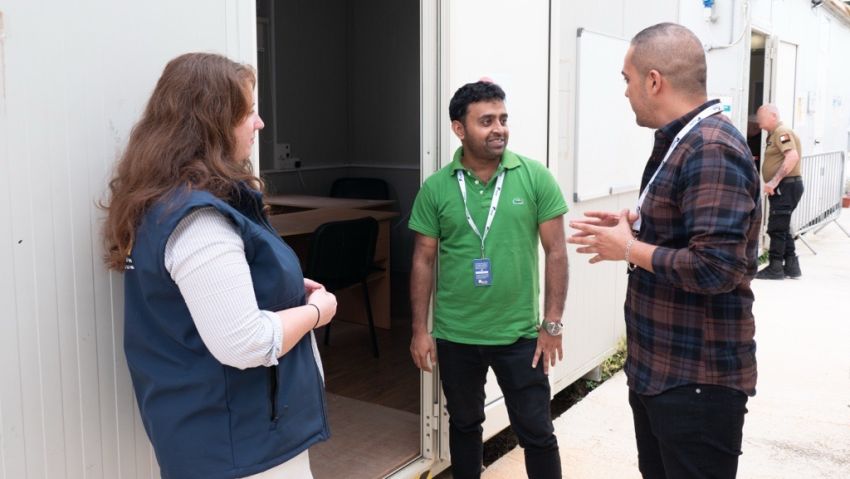
Since the beginning of the EUAA’s support to Malta under the Voluntary Solidarity Mechanism in 2022 until 31 December 2025, 276 candidates were registered.
| Main National Partners | |
|---|---|
| The Department for Civil Liberties and Ministry for Home Affairs, Security and Employment of the Republic of Malta | The Ministry for Home Affairs, security and employment gives political direction and launches initiatives in security and defence, immigration, law enforcement and citizenship. |
| International Protection Agency (IPA) | The International Protection Agency (IPA) is responsible for receiving, processing, and determining asylum applications for international protection |
Ioana Bornaci
Coordinating Officer
The European Union Agency for Asylum (EUAA) supports Romania through the 2025-2026 Operational Plan aiming at strengthening the national reception and asylum system in line with the Common European Asylum System (CEAS). The EUAA provides support to strengthen the Romanian national asylum and reception authorities in the following areas of:
- Temporary Protection (TP) and Asylum, through the registration of Temporary Protection beneficiaries, the access to the asylum procedure, the processing of applications for international protection, information provision, development of standard operating procedures, tools, and quality standards.
- Reception, by developing or updating information provision materials, strengthening the quality of the procedures in the field of reception and vulnerability, and through the provision of training for National Authorities.
The EUAA’s operational support is foreseen until 31 December 2026.
The EUAA has been supporting Romanian authorities since 2022 at the onset of the war on Ukraine, when Romania became one of the main entry points for people seeking Temporary Protection. This growing pressure on the asylum and reception systems led to the first Operational Plan signed on 28 March 2022, followed by expanded support in 2023 and 2024. Through these Plans, the EUAA assists Romania across Temporary Protection, Asylum and Reception with registrations, asylum interviews, information provision, development of quality procedures, and strengthening overall reception capacity.
Key moments:
- 2022: Signing of the first Operational Plan and set of the framework for the provision of technical and operational assistance, in the areas of Reception and Temporary Protection in response to increased number of TP applications and extraordinary pressure on the national asylum and reception systems.
- January 2023: Beginning of the support to Asylum covering registrations for International Protection, drafting of first-instance assessments, and enhancement of guidelines and tools.
- August 2023: Agreement on an Amendment to the Operational Plan, extending implementation until 31 December 2024 and reinforcing support across Temporary Protection, Asylum and Reception including registrations, information provision, asylum interviews, quality tools, reception capacity, interpreters and capacity building.
- December 2024: Signing of the current 2025-2026 Operational Plan.
Case worker in Bucharest
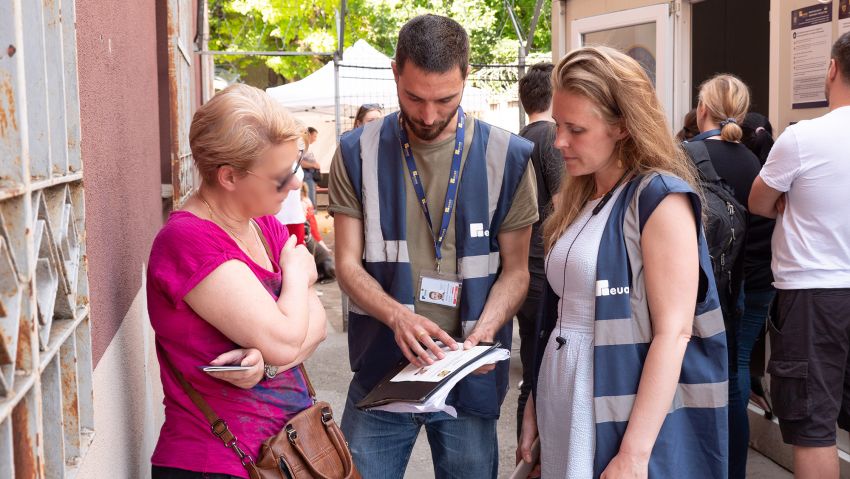
In 2025, 30 953 beneficiaries of temporary protection have been registered and 31 631 informed with EUAA support.
| Main National Partners | |
|---|---|
| General Inspectorate for Immigration – Directorate for Asylum and Integration (GII-DAI) | The Directorate for Asylum and Integration within the General Inspectorate for Immigration is responsible for access to procedure, first instance determination, subsequent application, registration of Temporary Protection applications and management of complex cases. |
| General Inspectorate for Immigration (GII-DM) Directorate for Migration |
The Directorate for Migration within the General Inspectorate for Immigration is responsible for the management of legal migration, irregular stay and returns, the Registration of Temporary Protection applications. |
| General Inspectorate for Border Police (GIBP) | The General Inspectorate for Border Police is responsible for the management of the borders and the first contact for Temporary Protection and asylum seekers. |
| National Authority for the Protection of Child's Rights and Adoption (NAPCRA) | The mandate of the NAPCRA includes providing legal representation to minors, including Unaccompanied Children (UACs), supporting social integration of minors, coordinating closely with asylum authorities to prioritise the best interests of minors in every decision. |
Santos Begoña
Coordinating Officer
The European Union Agency for Asylum (EUAA) supports Spain through the 2023-2026 Operational Plan, with the aim of strengthening the national reception system, in line with the Common European Asylum System (CEAS). Under this plan, the EUAA, through deployed Asylum Support Teams, provides support via the following main activities:
- Structural support on data management, EU funding and the development and expansion of reception capacity, including new construction of reception centres.
- Provision of information on Temporary Protection and International Protection in the field of reception, face to face in the four Reception, Care and Referral Centres (CREADEs).
- Emergency support for the implementation of the Contingency Framework and support to the Canary Islands, including support on site management and vulnerabilities procedures.
- Support for self-assessment and quality assurance tools in reception facilities, including centres for humanitarian assistance, international protection, and Unaccompanied Children (UACs).
- Training and professional development support for the main stakeholders in the field of reception and UACs systems.
The EUAA’s operational support in the context of the 2023-2026 Operational Plan is foreseen until 30 June 2026.
The EUAA has been supporting Spain since 2020 in strengthening its national reception system focusing on enhancing structural and organisational capacity, supporting responses to increased arrivals, particularly in the Canary Islands, and cooperating in the field of resettlement.
Following successive requests for support by the Spanish authorities, the EUAA progressively expanded its assistance to address evolving reception needs, including emergency response and contingency planning, information provision, and capacity building. In 2022, the scope of support was further extended to assist Spain in the implementation of the Temporary Protection Directive in response to the arrival of displaced persons from Ukraine.
This progressive cooperation laid the foundation for the current multiannual 2023–2026 Operational Plan, which further broadened EUAA support, particularly in the reception and protection of UACs, strengthened quality assurance and vulnerability procedures, and expanded the number of national stakeholders involved, including the Ministry of Youth and Childhood, in line with the CEAS.
Key moments:
- 17 December 2020 – Signature of the first Operating Plan, launching EUAA (former EASO) operational support in Spain, focusing on a new reception model, structural adjustments, training, and emergency support in the Canary Islands.
- 17 December 2021 – Signature of the second Operating Plan (2022–2023), expanding support in areas such as information provision, vulnerability procedures, contingency planning, reception conditions monitoring, and development of new reception centres.
- May 2022 – Amendment to the 2022–2023 OP signed, extending support to help Spain implement the Temporary Protection Directive following increased arrivals of Ukrainian nationals.
- June 2023 – Signature of the third Operational Plan (Jun 2023-Jun 2026), expanding cooperation - particularly on reception for UACs - including the Ministry of Youth and Childhood as a new stakeholder (OP signed by the former Ministry of Social Rights and Agenda 2030).
EUAA case worker in Malaga, Spain.
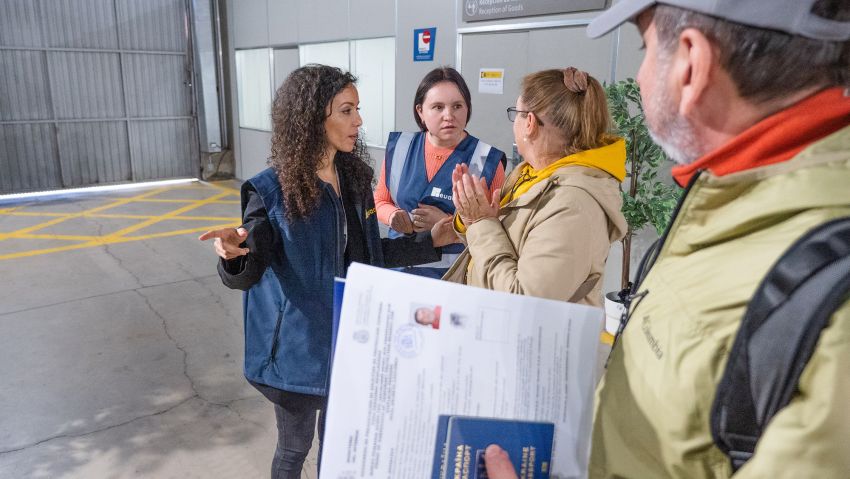
In 2025, 27 653 persons have been informed in person or via Hotline service
| Main National Partners | |
|---|---|
| Ministry of Inclusion, Social Security and Migrations (MISSM) | The MISSM is the ministerial department responsible for Social Security and state pensions, as well as for formulating and implementing the Government’s policies on immigration, emigration, and inclusion. Whitin this ministry resides the State Secretary for Migration. |
| State Secretary for Migration (SEM) |
The State Secretary for Migration is responsible for developing policies on foreigners, immigration, and migration. Within it, the Directorate-General for Humanitarian Assistance and the Reception System for International Protection oversee international protection and humanitarian assistance. The Directorate-General comprises the following Sub-Directorates General:
|
| Ministry of Youth and Children (MYC) | The MYC is the ministerial department responsible for the Government policies concerning the protection, promotion, and comprehensive safeguarding of the rights of children and adolescents, as well as the prevention of situations of need that may affect minors. It is important to note that the foster care system for Unaccompanied Children (UACs), as well as most of the competences regarding UACs, falls under the jurisdiction of the Autonomous Communities. |
| State Secretary for Youth and Childhood |
The State Secretary for Youth and Childhood, under the authority of the Minister, is responsible for promoting and coordinating government policies on youth, adolescence and childhood, with a focus on protecting constitutional rights and the public interest. Within the State Secretary, the Directorate-General for the Rights of Children and Adolescents (DGDIA) is responsible for promoting the rights of children and adolescents, within the framework of the State’s constitutional competencies and in cooperation with the autonomous communities. |
Nadia Gmira-Verots
Coordinating Officer
The European Union Agency for Asylum (EUAA) supports the Dutch authorities through the 2022-2026 Operational Plan, aiming at strengthening the national reception system in line with the Common European Asylum System (CEAS). The provided support focuses on two key areas:
Child protection, through the deployment of EUAA experts in Unaccompanied Children (UACs) reception facilities across the country, providing day-to-day child protection support, and case management services while developing and delivering psychoeducational and recreational activities for children as well as capacity building activities for the personnel of the Central Agency for the Reception of Asylum Seekers (COA), the national reception authority.
Management of arrivals at the Ter Apel arrival centre, through information provision, the pre-identification of vulnerabilities and special needs and psycho-social activities targeting the general population of the centre (until 31 October 2025) and the UAC sections (until December 2025).
The EUAA is also providing material support to COA, with 180 mobile units, containers, being used as accommodations in two reception locations. The EUAA’s operational support is foreseen until 30 June 2026, with the exception of the support to Ter Apel that was completed in December 2025.
The EUAA has been supporting the Netherlands since 2022 when the first Operational Plan 2022 was signed, in response to the increased pressure placed on the national reception system.
In the field of reception, the EUAA support initially focused on increasing reception capacity and gradually evolved into more frontline activities, such as information provision and case management. With the third amendment to the Operational plan, EUAA is focusing on both frontline support to COA and structural support with operational capacity building interventions for COA personnel. In 2024, the Agency also provided timebound support to asylum procedures, through the processing of asylum applications at first instance under the PEPAC project (Project Expedited Processing Asylum Claims).
Key moments:
- 5 May 2022: Signing of the first Operational Plan 2022, initiating EUAA support to the Dutch national authorities in the area of reception.
- 2023-2024: Extension of the EUAA’s operational support through consecutive Amendments, covering reception and -from January to July 2024- asylum case processing under the PEPAC project.
- 17 December 2024: Signing of the third Amendment to the Operational Plan 2022-2026, extending the EUAA’s support in reception.
- December 2025-June 2026: Gradual handover of operational activities to the Dutch authorities considering increased capacity and sustainability of the support.
Art works by international protection applicants at Ter Apel.

In 2025, the EUAA supported 6 871 information provision sessions in the Ter Apel arrival centre and delivered 8 209 reception-related support activities in the Netherlands.
| Main National Partners | |
|---|---|
| Central Agency for the Reception of Asylum Seekers (Centraal Orgaan opvang asielzoekers - COA) | The Central Agency for the Reception of Asylum Seekers is the responsible authority for the reception of applicants for international protection in the Netherlands. It provides accommodation, material support, safety and guidance while managing reception centres. |
| International Protection Agency (IPAMinistry of Asylum and Migration | The Dutch Ministry of Asylum and Migration is responsible for asylum and migration policy in the Netherlands. |